
I have a somewhat tortured relationship with my artistic abilities. Somewhere in childhood, some circuits got muddled. My drawing abilities in elementary school were pedestrian at best. My father preserved several examples, found after his death, tucked safely away in his papers. They are sweet but unexceptional. As a child, I don’t recall any leanings towards drawing or painting.
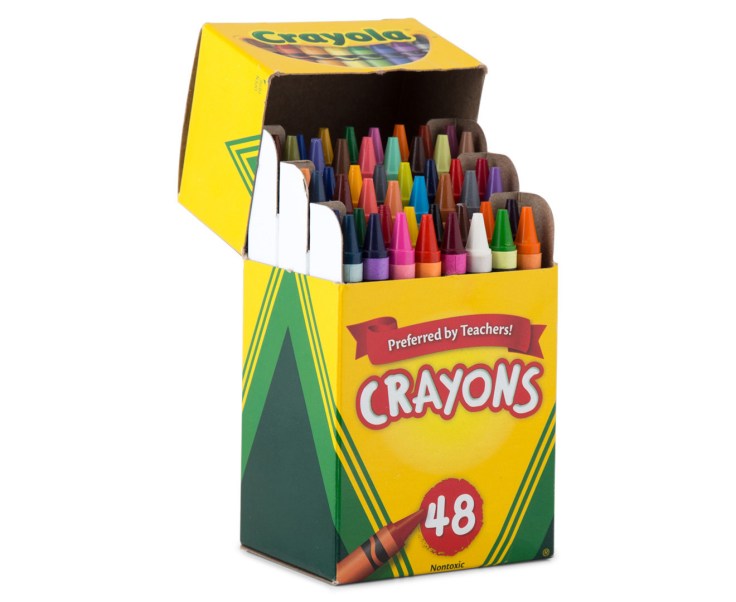
But then there was coloring, and I loved coloring. There were coloring books, of course, and in school, we were given mimeographed drawings of scenes, animals, and objects to color. In the third grade, I was at work on one of these mimeographed sheets, a farm scene with cows, and the teacher chastised me for coloring one of the cows purple. In 1955-56, such an action was wrong. I recall embarrassment but also a bit of rebellion. I don’t know if I was sophisticated enough to form the thought that cows can be any color you want in art, but I do recall thinking, “Why can’t the cow be purple?” with a bit of petulance.
This event has stayed with me longer than it should have. As I got older and traveled through the school system, “art” became something that made me tense, and I fell into the dreaded and whiny, “I can’t!” For many years, I did not feel particularly artistic. In retrospect, I now see that artistry and creativity were equated in my head. They are not necessarily synonymous, but in the educational system of the 1950s, they were.
History, whether vast or personal, must be placed in context. In post-World War II, there were expectations. Boys, of course, played sports and weren’t expected to be artists. But girls were expected to have some “culture.” My sister, older than me by five years, really excelled at the “cultural” things. She could draw quite well and played the piano. I was pushed in similar directions and failed. I could barely draw a straight line, and just as I began to appreciate the piano (after a couple of years of frustrating and endless scales), my family moved to Florida and left the piano behind in Massachusetts.
Thankfully, there was a 1950s phenomenon that helped put the purple cow episode behind me: paint-by-numbers. The concept was patented in 1923, but it really caught on when a paint company owner, Max Klein, teamed up with an illustrator, Dan Robbins, to create the Craft Master brand. Introduced in 1951, the brand went on to sell 12 million units!
A few of those units arrived in the O’Leary household and became a family event. At first, I was shut out of the fun. As the youngest, my motor skills weren’t the best yet. Eventually, under supervision, I was allowed to paint some of the large areas of sky or sea. Paint, after all, is expensive and messy. My mother, sister, and the youngest of two brothers, Peter, became the primary “painters.” But the clever Messrs. Klein and Robbins soon invented color-by-number kits perfect for children like me. That, of course, led to lusting after the cleverly packaged Crayola crayons. I can still see those beautifully displayed crayons.
In 1996, Peter was dying of pancreatic cancer, and I traveled to California to visit. On arrival, I found him at the family dinner table with a paint-by-numbers kit. It brought back many memories, and we talked about those Craft Master kits from long ago. I think the paint-by-number kits were a haven for Peter. He was a quiet and shy boy in a time that wasn’t sure what to do with quiet and shy boys. Now, in his final days, that comfort returned.
All of this came back to me recently as I impatiently dealt with recovery from knee replacement surgery. Unable to get about and bored with streaming TV, I thought about paint-by-numbers. Surely there’s an app for that, I thought. Of course, there is. Dozens in fact. It’s easy to become overwhelmed in these situations. I plunged in with two “free” apps, Lake Color and Zen Color. Nothing is free, of course, and the annoying “in-app purchases” quickly drove me to the paid editions, as designed.
If you didn’t know (I didn’t), there are two types of coloring apps: one is the descendent of those Craft Master kits with numbers corresponding to colors. But they are much easier than the old Craft Master kits. You simply choose a color, find its corresponding number in the sketch, and tap. Voila! The color magically fills the space. No worry about staying in the lines or choosing the wrong color (no opportunity for a purple cow, either). For that style, I chose the Zen Color app. I think the “Zen” comes from the fact that you can lose yourself while filling in the colors. It can be quite addictive.
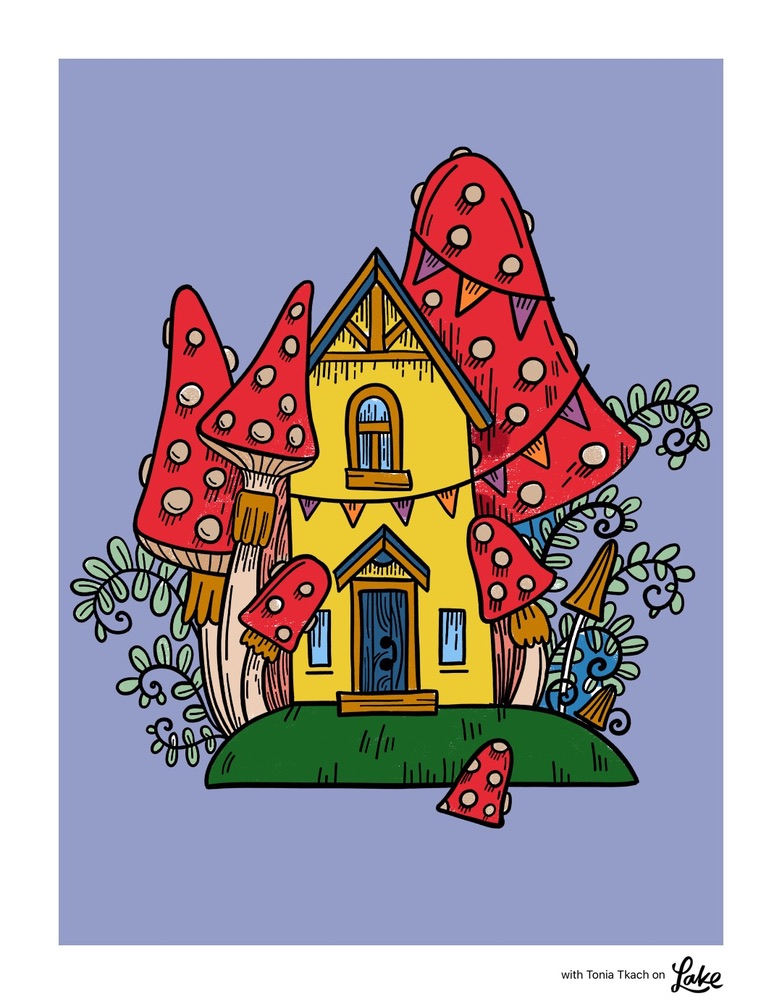
The Lake Color app is more freewheeling and artistic. It presents a sketch with an array of color palettes and tools. With no third-grade teacher hovering, you can have a lot of fun here. The sketches range from easy to exceedingly complex, and you can let your creativity soar with Lake. Still stinging from my third-grade teacher’s comment, I looked for a cow to paint purple. Alas, cows are not in favor. The same cannot be said for kittens and unicorns, of which there are dozens. So I looked for something whimsical and started in. That’s my first effort with Lake featured above. Lacking a cow to paint purple, I went for the sky. I still can’t draw, but I do feel artistic. ❧
 Alice's WanderLand
This piece is such a lovely step-back in time. I remember ‘those teachers’ that skewed our development, and the absolute thrill of a new Crayola box (48 count, if we were lucky). I’m going to try the Zen app, because you’ve stirred my nostalgia pot.
LikeLike