That’s Bubba the Burro … although he should really be called Bubba the Bouncer. We normally think of burros as docile, hard-working beasts of burden. Or as stubborn, ornery creatures who are just a trifle on the dim side. But Bubba doesn’t fit any of those descriptions. He heads up security at the King Farm in Bradenton, Florida.
King Farm is a beautiful tract of 103 acres, situated east of Interstate 75 at the State Road 70 exit. As you whiz by the normal assortment of fast food restaurants, gas stations, and box stores you wonder how a working farm could be anywhere near the urban sprawl of Southwest Florida.
But King Farm is easy enough to find, a simple right turn off SR 70 onto Caruso Rd. and soon enough you’ll see the sign. I traveled there a week ago to photograph cows. Recently I decided I need more cow pictures and the gods obliged that thought when I met Ben and Shelby King at a mutual friend’s party. After learning what they do I quickly invited myself to their property for a photo session. They graciously agreed.
Gracious is a word that fits nicely with King Farm. For several months out of the year they have a farmer’s market where they sell organically grown produce. They serve the community in numerous ways, including farm tours for school kids and opening their property to art students so they can sketch and paint some of the beautiful landscapes as well as iconic images of barns and tractors.
The Kings don’t actually raise cattle (they rent out the grazing land) but they do raise goats and sheep. They never expected to own a burro but after coyotes began attacking their goat and sheep herds they needed to take some action. Someone suggested a burro and since acquiring Bubba they haven’t lost a single critter. Bubba the Bouncer is a pro.
Looking at the size of Bubba’s ears I can believe there is nothing on earth that could sneak up on him. That included Shelby and I. Bubba came trotting across the field as soon as he spotted Shelby. Bubba has a crush on Shelby, that was clear. He kept nudging (and sometimes nipping) everyone else (including me) as he positioned himself between Shelby and the rest of us. Just doing his job! ❧
It was some years back that I first came across the word “fecundity.” My recollection is that the word was the title of a book that I bought, written by Annie Dillard, Gretchen Erlich, Barbara Kingsolver — someone of that genre — but, if it was, I no longer have it. Nor can I locate anything close to it by employing web search. Don’t get me wrong, there are plenty of books on “fecundity” and that seems only natural if you know what fecundity means. One dictionary describes it this way:
ability to produce offspring: the ability to produce offspring, especially in large numbers
This particular definition fits with the trend that I found in searching for the book I thought was named “Fecundity”. Most books with this word in its title seem oriented towards population control and the effects on unbridled fecundity upon civilization.
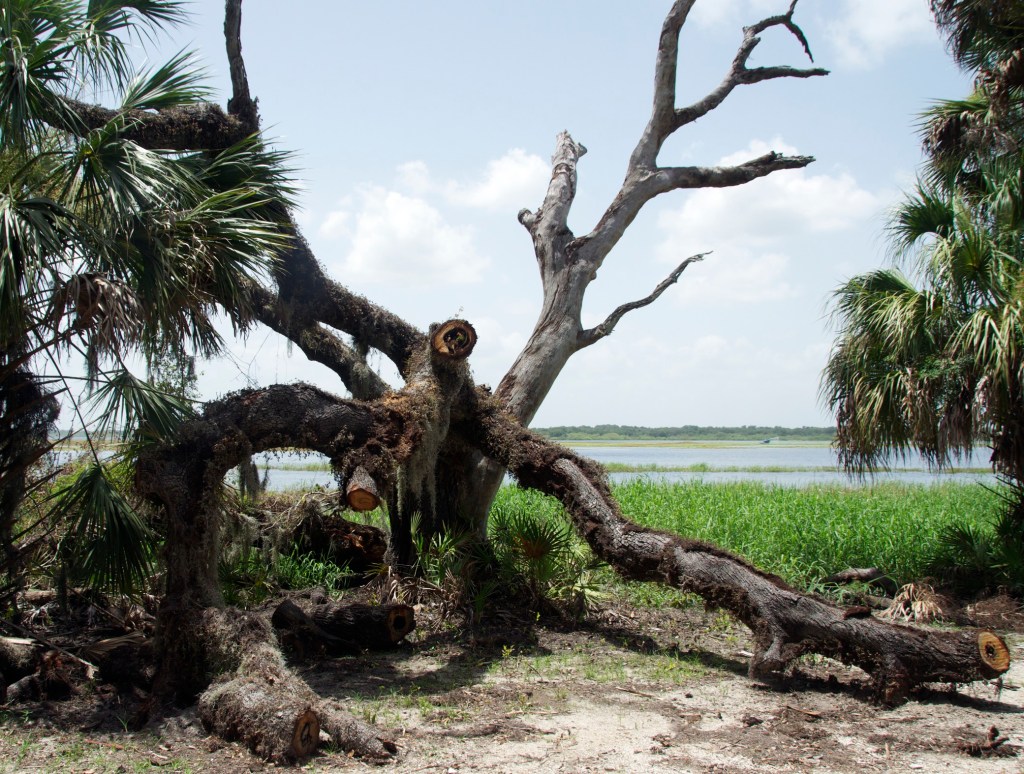
Shattered oak tree by road along Upper Myakka Lake.
But the book or essay that I am recalling was not of that orientation. Rather it was an enthusiastic look at the power of life to re-generate even under the most dire circumstance. I think of the word often in my trips to Myakka River State Park. It has has crossed my mind during the past weeks as I drove past this old oak tree that had stood by the Upper Lake for many years. You could see it was weakening. One section had already died and lost leaves, limbs, and bark. Tropical Storm Debby brushed by Sarasota in late June 2012 and its minimal winds and excessive rain was the final straw for the oak. It collapsed, part of it blocking Park Drive. And so the rangers came with their chain saws and cut enough to clear the road. The debris was pushed to one side and they moved on to the next problem.
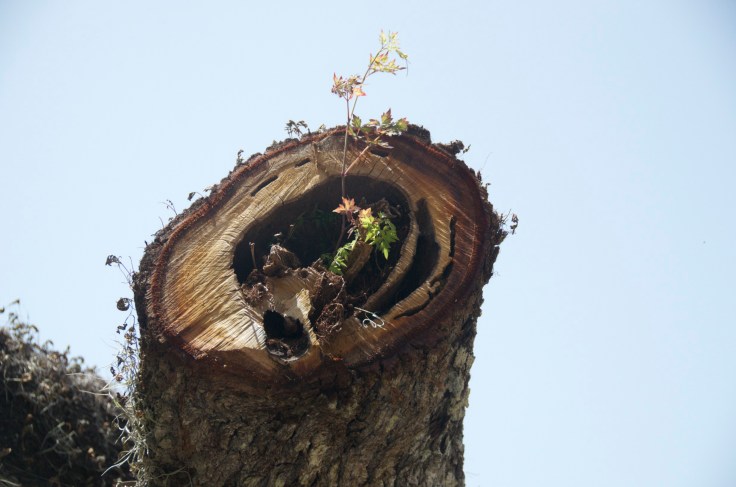
It was a month later when I shot this next image. Springing from the clean cut of the chain saw amputation was a fecund and colorful offspring .
Life springing from dead oak tree.
I first thought it was a small oak, struggling to find the sun and start the process over again. As I look at it today I think that it may just be a vine of some kind. But it doesn’t really matter what it might be because that isn’t the point of this essay. Nor is my goal to praise fecundity because reproducing offspring in large numbers is not especially a healthy concept at this point in our evolutionary course.
The point is to celebrate the grandness of life, a life that can spring hope and rebirth from the shattered ruins of a once proud oak tree. As humans we are all too likely to just see the shattered tree and feel sadness for what had been. Peace comes from the acceptance that all things must pass and the knowledge that the world will go on. ❧
Very often I’ll come across a bumper sticker that just leaves me speechless. Like this one. Why would you ever put such a thing on your car? What is the point?
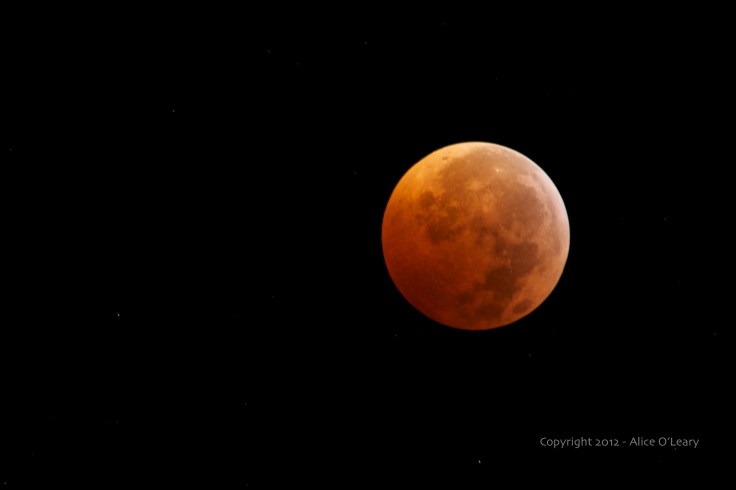
This picture is a couple of years old now but still handsome. In nine days we will mark the 43rd anniversary of the first moon landing. I miss that sense of wonder that we had then.
Driving home from work tonight I passed the local Girl Scouts of America headquarters. On the sign which fronts the main road the message read “Girl Scouts 100th Birthday/ 1912-2012.” The marquee has been up there for some time but tonight it made me think of this picture.
That’s my mother, age unknown but certainly not much more than 10. Peering out proudly from her original issue Girl Scout hat. And I mean original issue. Martha Hathaway Whitaker O’Leary was born in 1911 and if you do the math that means she was one year older than the Girl Scouts. So this picture is probably from the first decade of the Girls Scouts of America. Pretty cool, huh?
Martha was a good person and no doubt the Girl Scouts helped mold her character. She would serve as a Scout leader in Norton, Massachusetts for many years. We moved to Florida in 1959 and her scouting days ceased. I wonder why? Just another in the long list of things you-wish-you-had-asked your parents. Perhaps it was just as simple as “enough”. But the Scouts roll on and do good things. Martha would like that. ❧
Maybe it’s the heat, maybe it’s summer wanderlust but I awoke thinking of Scotland. Here’s a picture from my last trip to that charming land. This is the seashore near Dornoch.
Thunderheads mass over the Sarasota National Cemetery
Our National Cemetery in Sarasota is filling fast. The men and women who served this country during World War II now have the dubious distinction of being the generation that is dying at the fastest rate in the U.S. I know (knew) so many of them. I’ve cared for them as a hospice nurse and, in my current role as a grief specialist, I have counseled them and, later, their loved ones left behind. They are a tremendously strong and proud generation. They jumped so many huge hurdles in their lives that many can never accept that their time is coming to an end. Remarkably, many couples that have been married for 50, 60, or 70 years never discuss the prospect of death. Independent to a fault, they stubbornly remain in private homes long after they should. They are not able to care for them and their safety is seriously compromised. Widows lead solitary, isolated lives because they promised their spouse they would stay in the family home forever. It can break your heart, it has broken mine on many occasions.
So, to those who may be reading this and have a parent, aunt, uncle, cousin or friend who is in this “Greatest Generation” do them a favor. Talk to them about end-of-life plans. If they tell you “there’s plenty of time for that,” tell them they are wrong. Talk to them, ask questions about Plan B (what will they do when they must leave the family home). Help them sort through the years of memories and possessions.
Some people say that leaving this world is the ultimate “independence.” Help your loved ones leave with the dignity, safety, and sense of accomplishment that they deserve. ❧
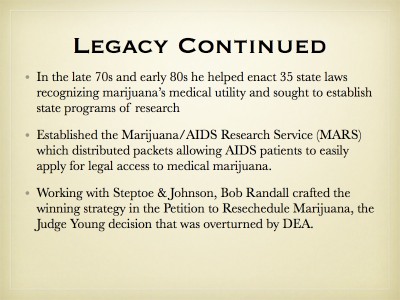
For more than two decades I worked with my husband, Robert Randall, to achieve the practical, but ever-elusive reality of prescription access to cannabis (marijuana) for those with life- or sense-threatening disease. He had glaucoma and discovered, quite by accident, that marijuana could help preserve his sight. He proved this fact to the Federal government in 1976 and received legal supplies of Federal marijuana until his death in 2001.
Robert’s death moved me in new directions and I was compelled to pursue my own calling — hospice work. Robert has been gone for eleven years and I am just starting my seventh year with Tidewell Hospice. It has been fascinating and rewarding work. But my involvement in the med pot issue was too deep and too long to simply drop it and walk away. Robert and I made friends — good friends — as we tried to change the laws that prohibit medical access. You cannot turn your back on good friends but relationships can change. After Robert died I had no interest in “stumping” for medical marijuana. My own spirit was calling to me and I am happy I pursued it. But what to do about med pot?
It was a seminar at a conference of grief counselors (my current profession) which gave me the answer. The speaker, Harold Ivan Smith, is renown for his ability to look at a political family which has experienced loss — think of the Lincolns, Roosevelts, and Kennedys — and convey to his audience the effects of grief on those grieving families and history. His most recent focus is Coretta Scott King, a truly amazing woman in her own right, who, after the death of her husband Martin, adopted the position that she would not seek leadership in the civil rights movement (which she easily could have done) but would do everything she could to preserve and protect her husband’s legacy. That rang like a clarion bell to me. I had already been doing that very thing but, just as in any grief situation, the validation of actions is enormous.
Robert C. Randall was not Martin Luther King, Jr. and I’m certainly not Coretta Scott King but like the Kings, Robert and I did have an impact. We forged new cultural territories, we changed many minds, and we helped a lot of good people through some bad times. The best I can do now is keep that memory alive. After all, those who do not learn history are condemned to repeat it. ❧
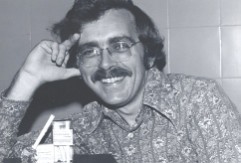
Robert C. Randall in November 1976 with his first supplies of legal marijuana from the federal government. He would receive federal marijuana for more than 25 years to treat his glaucoma.
Eleven years ago today my husband died. Robert C. Randall was 53 years-old.
He was a man of some notoriety. Often described as “the father of medical marijuana,” Robert accomplished a great deal in his 53 years. In 1976 he became the first American since 1937 to receive marijuana under a doctor’s prescription and was the first to have “Uncle Sam” as his pharmacy. Until Robert’s victory the only access to federal supplies of marijuana was through research programs and most of those programs were searching for the “harm” that marijuana would theoretically inflict upon the “drug abusers” of the 1970s.
But Robert proved — conclusively — that marijuana was THE drug that could help stave off the blindness which his glaucoma was certain to cause. He used it in conjunction with other glaucoma medications and that is important to note. He didn’t choose to use marijuana (although he didn’t mind using it). It was only through the addition of marijuana to his regular medication regimen that his ocular pressures were lowered enough to prevent damage. Take away any of the three to four medications that he used, including marijuana, and his ocular pressures went out of control.
All of this is well documented in books, films and on the internet. Before starting this essay I did a Bing search this morning and was pleased to find even more entries than I had on previous occasions including a new, biographical entry on Wikipedia. Three years before his death we authored a book, Marijuana Rx: The Patients’ Fight for Medicinal Pot which is a complete record of our twenty-plus years in the medical marijuana movement. His legacy seems assured and rightly so.
And the medical marijuana movement goes on without him. There were many soldiers willing to seize the banner as it fell and lead the charge. The problem, it seems to me, is most are unsure of the direction the charge is supposed to go. As Robert wrote, “Once a morality play of intimate dimensions, medical marijuana has become a didactic drama driven by drug war motifs.” He wrote those words in 1998 and they have become the reality of today’s world. The “drama” of medical marijuana has gone on for so long, in so many different directions, that the result is a confused public that hears repeatedly about another “medical marijuana first” but has no idea what the fight is about. “Medical marijuana?” they say, “That’s legal, right?”
Marijuana dispensaries are popping up in most states. Their legality is clearly questionable since marijuana remains illegal under federal law. Enforcement of this federal law is erratic and obviously prejudicial, dependent it seems of the direction of the political winds. Many patients are actually receiving regular supplies of decent marijuana but the hard arm of the law could swoop down at any time and disrupt their health and wellbeing. And there is the matter of “necessity.” Almost two decades ago an activist proclaimed “all marijuana use is medical” and the early dispensaries in California were notoriously lax in their definitions of “qualified” patients. This has further diluted the argument making it harder for those with legitimate needs to get the support, both medical and pharmaceutical, that they need.
Don’t get me wrong. There are many good people out there still working for rationality and compassion for those who medically need marijuana. It is very touching to me that several dispensary operators have sought my permission to name their facilities after Robert, most recently in Lansing, Michigan. These dispensaries are being operated in a remarkably responsible fashion and offer an oasis in a desert of arid federal policy that has not moved one iota in twenty years (since Bush 41 shut down the Compassionate IND program) let alone the past 35 years since Robert received his federal supplies.
There is still a medical marijuana movement but the medical marijuana issue, it seems to me, died with Robert. He was able to focus the blame where it rightly belongs — at the federal government which has maliciously thwarted every reasonable attempt to rationally resolve a true public health problem. Until such time as the immoral acts of the federal government are once again in the public spotlight it will be a difficult time for those seriously ill individuals who truly need marijuana medically.

 That’s Bubba the Burro … although he should really be called Bubba the Bouncer. We normally think of burros as docile, hard-working beasts of burden. Or as stubborn, ornery creatures who are just a trifle on the dim side. But Bubba doesn’t fit any of those descriptions. He heads up security at the King Farm in Bradenton, Florida.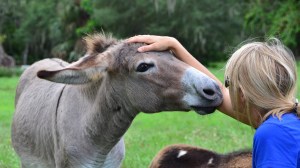






 Alice's WanderLand