Three Weeks at Myakka

On May 27th I travelled out to the Park and found the drought situation was more severe than ever.  The official river gauge was 0.07 inches.  In short, there was no Myakka River.  Check out this photo from the Park Drive bridge.

Taken from the Park Drive bridge, May 27, 2012. The Myakka River gauge on this day was 0.07 inches. There was, essentially, no river.

I walked down the bank to the river bed and shot this photo looking back at the Park Drive Bridge.

Taken from the north river bank, looking back towards the Park Drive bridge. May 27, 2012

From that vantage point it was an easy trek up the dry river bed.  It was quite astonishing to stand on the river bed, knowing that normally the waters would be easily 4-5 feet high.  On May 27th there was barely a trickle.

Taken on the Myakka River bed, facing north on May 27, 2012. The river gauge this day recorded 0.07″.

My next stop was just up the road, in a small picnic area that has no name.  I’ve taken many pictures here over the years but had never seen things this dry.
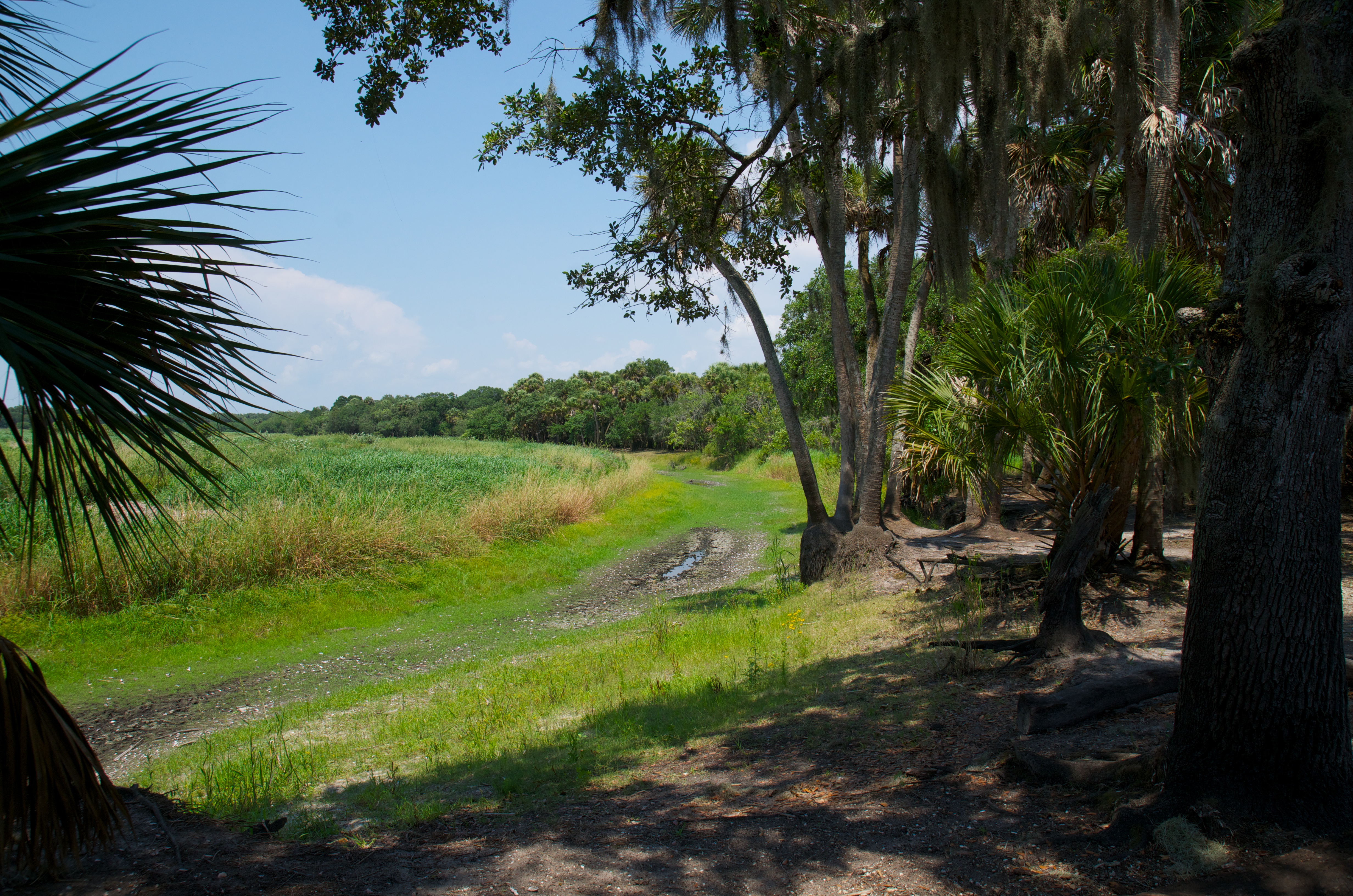
A completely dry river bed on Myakka River, May 27, 2012.

Can things get any worse?  Probably so but thankfully not.  A week later I would return to Myakka River State Park and the contrasts would be amazing.  During the week we had one day of good rain here in Sarasota County.  But to our north, in Manatee and Hillsborough Counties, there were extended rains.  Here is the same spot, one week later.

Fishing on the Myakka River, June 3, 2012.

A remarkable turn around in just seven days.  But the real astonishment was waiting on June 10, 2012.  After a very wet week in Sarasota County I checked the river gauge for Myakka River.  To my astonishment the River had risen from 0.07″ to 4.65′!!  And here is the result.

June 10, 2012. Myakka River level at 4.65′.

And at the Park Drive bridge there was no longer any chance to shoot the bridge from below.
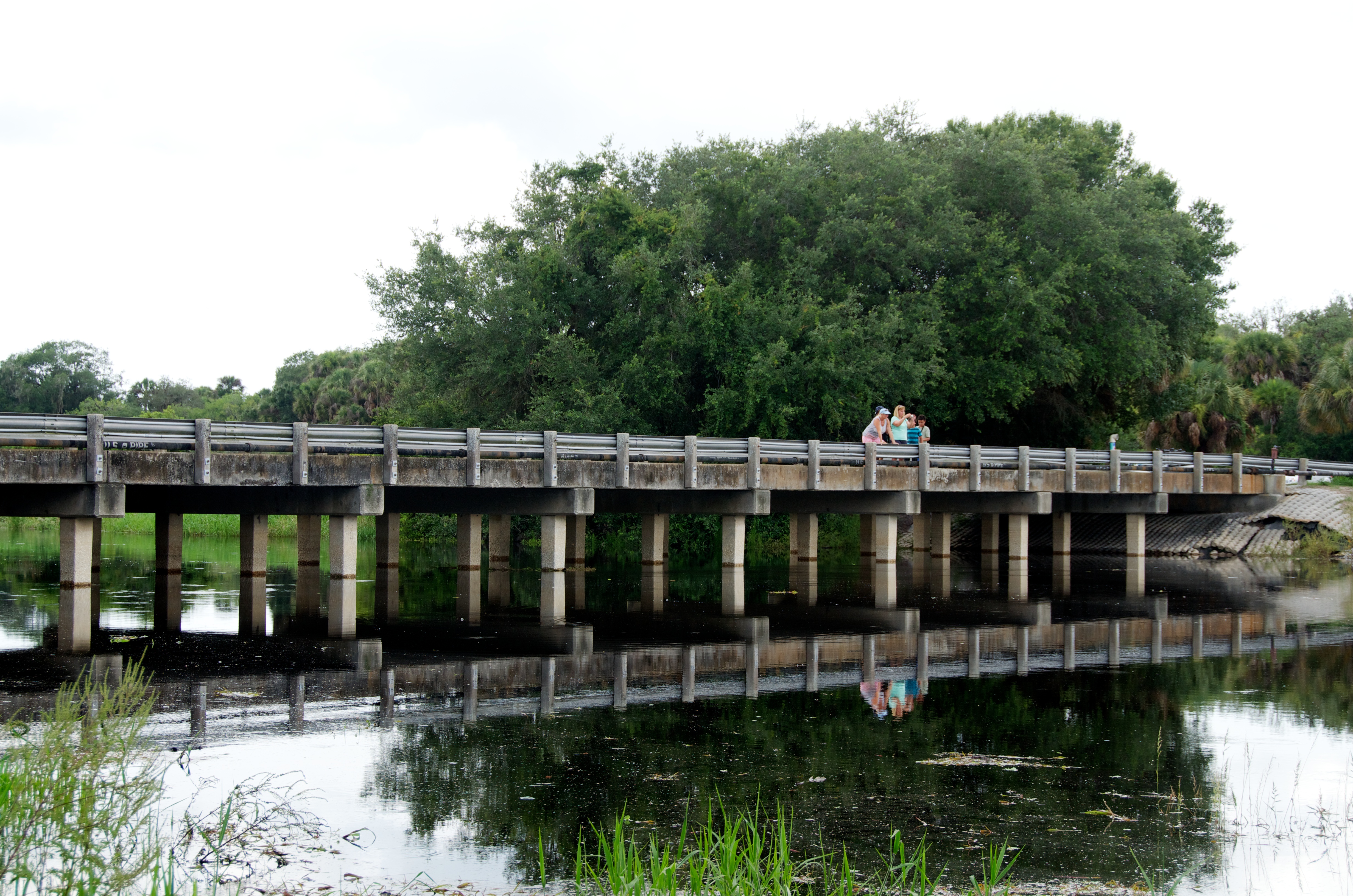
Park Drive bridge, June 10, 2012.

The remarkable and ever-changing Myakka River State Park had once again amazed everyone with its ability to rejuvenate, seemingly over-night.

Myakka River State Park

I spend a lot of time at Myakka River State Park.  It’s located in Sarasota County and is one of the crown jewels in Florida’s magnificent state park system.  I love this place so much that I’ve taken more than 4,000 photographs there, walked or biked most of the available trails and recently, because of our severe drought, I was able to walk a good portion of the river bed.

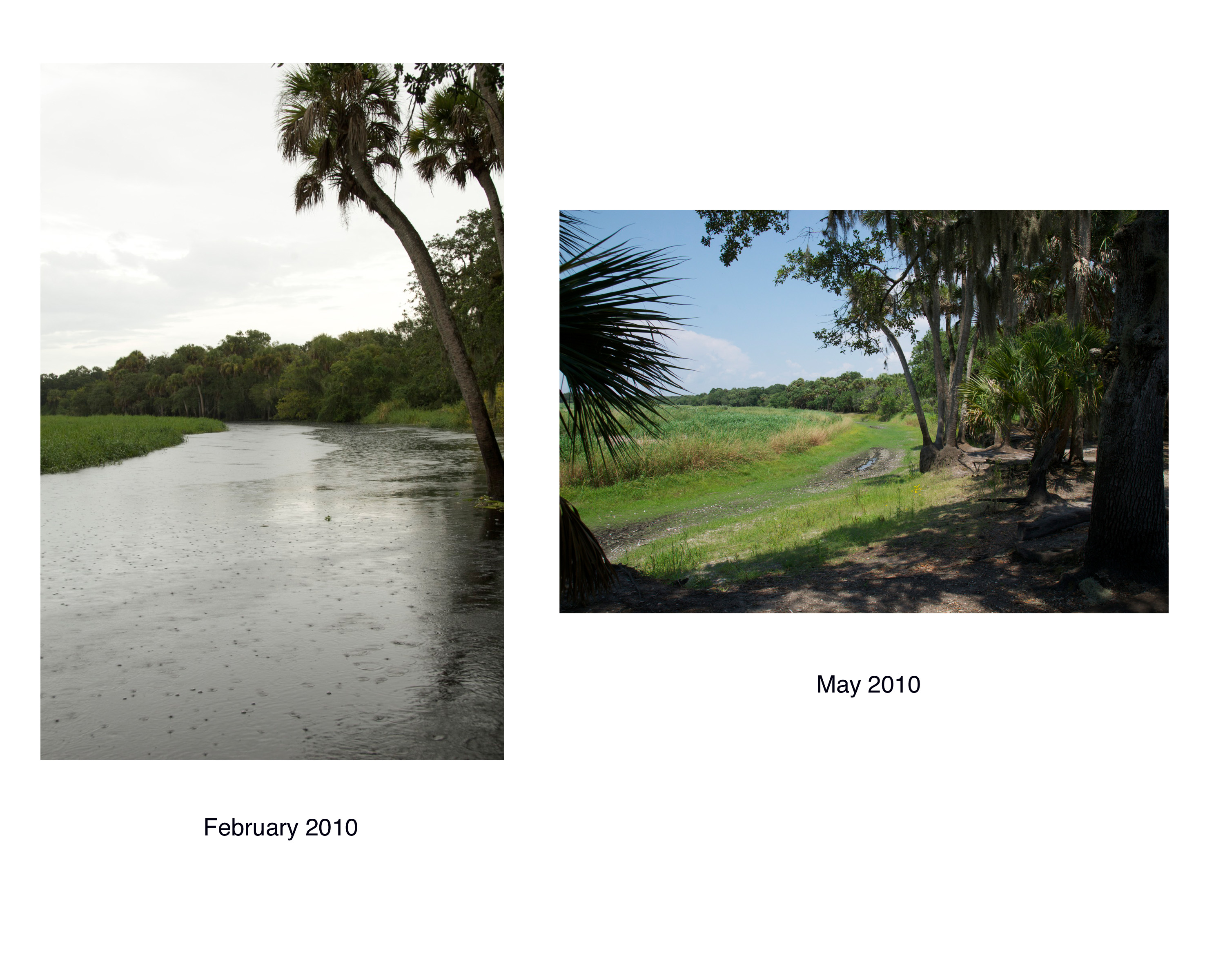
Look at these two photos.

Taken from the same spot twenty-seven months apart and you can get a good sense of just how bad our drought is here in South Central Florida.

The beauty of the drought has been how accessible it makes portions of the Park that otherwise are simply off-limits because of water or tall grass or both.  Walking below the Park Drive bridge, for example, doesn’t happen every day.

Park Drive Bridge – May 2012

You can literally walk on the river bed where there are hundreds of mussel shells, cracked open by hungry birds.

Mussel shells on dry river bed

And you find dead LongNose Gar, a fearsome looking fish that was no match for the ever-shrinking waters.

Long Nose Gar skeleton near Alligator Point.

There are many skeletons along the river bed. Only heaven knows what they might have been or how they met their demise. In times of high water you never think what is below the surface but it is clearly teeming with life and as that life shrinks away how will the other critters manage?  Yet the same is true on the other side of the scale.   How do birds manage in times of flood when there are no river banks to stand upon and await a meal?  How do they manage in times of drought when all the river banks have gone away and all the aquatic animals have died?  There are no answers.  Life carries on, somehow.  In a “civilized” society we sometimes lose track of the extremes in nature that are occurring just a few miles from our comfortable homes.  I doubt we could do anything to help relieve the stress that Park critters are enduring just now but perhaps we could become more appreciative of our own bounty and the importance of “Waste not, want not.” ❧

Blog at WordPress.com.

Up ↑