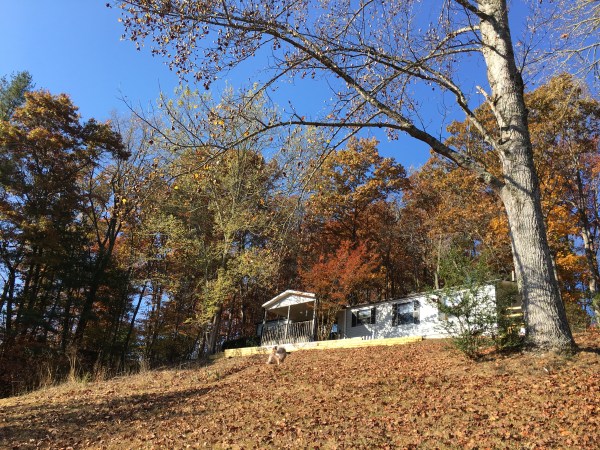
Don’t Be A Milo

From the time of Caesar, and likely before, politics has been a family affair. It is quite likely that you vote for candidates from the same political party as your parents. Decade after decade, families have voted Republican or Democrat, depending on how their parents had voted and their parents before them.

But America’s melting pot culture brings about changes. This occurred in my own family. My father, James Chester O’Leary, was a staunch Democrat, a descendant of Irish Catholics from Rhode Island. My mother, Martha Hathaway Whitaker, was a descendant of New England’s aristocracy. She was rightly proud of her seventh great-grandfather, William Bradford, one of the founders of the Pilgrim bastion at Plymouth Rock and its first governor. Her family consistently voted Republican.

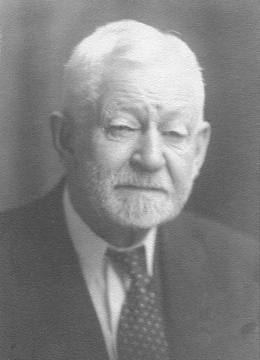
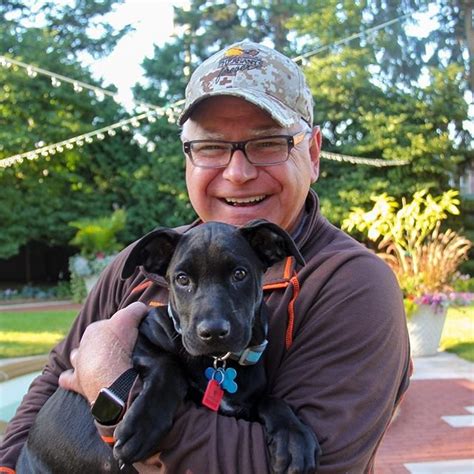
My parents married in 1937 and lived in Norton, Massachusetts, with my mother’s grandfather, Milo Rockwood Whitaker. Born in 1857, Milo was an old man and needed caregivers. By all accounts, Milo was delightful and revered by his neighbors, children, and grandchildren. He died in 1946, the year before my birth, so I never had the good fortune to know him. But we have many pictures of him; as you can see, he was a good-looking, seemingly kind-hearted man. He was notoriously Republican, a party formed just three years before Milo’s birth. (Before becoming Republicans, the Whitakers likely were members of the Whig party.) Practical, conservative, and fiscally responsible, that defines the Whitakers of the late 19th century and throughout most of the 20th century as well.

In 1944, Franklin Delano Roosevelt was running for an unprecedented fourth term as president of the United States. Roosevelt had led the nation out of the Great Depression and was now leading it in the fight against fascism in World War II. There was a definite sense of “don’t rock the boat.” However, most of the country also felt that Roosevelt had done well. Roosevelt is the first president for whom we have archival popularity polls, and his rating was an astonishing 70% just before World War II. That level of national support doesn’t come from just one party. Roosevelt had earned the respect of Democrats and Republicans, including Milo.

According to accounts, my father and Milo would often engage in political talk, and my father knew that my great-grandfather admired Roosevelt and his leadership. So, in 1944, as Roosevelt campaigned against Thomas Dewey, my father asked Milo if he would vote for Franklin Delano Roosevelt. Milo thought for a moment and then said, “Chet, if God was running as a Democrat and the devil as a Republican, I’d have to vote for the devil.”

My father told the story countless times during my youth, and I suppose it’s not surprising that I would remember it in this extraordinary election of 2024. It seems to me we have many Milos in this country—individuals who have voted Republican all of their lives and now are compelled to vote for the devil. What else could possibly explain the enduring allegiance that some people obviously have towards Donald J. Trump?

But is it allegiance to Trump or the Grand Old Party? I suspect it is the latter. I read once that loyalty to Trump was like loyalty to a constantly losing baseball team. There is no rhyme or reason, only loyalty, and loyalty is usually an admirable trait. But loyalty can also be perverted, twisted, and tormented into a shape that barely resembles what it once was. Today’s GOP would be unrecognizable to Milo. It is scarcely recognizable to some present-day members. Some, like Liz Cheney and John Kelly, have bravely broken rank and are attempting to rally their fellow members to vote Democrat. As the Republican former Lt. Governor of Georgia said at the Democratic convention, voting for Harris doesn’t make you a Democrat; it makes you a “Patriot.”

If Milo were alive today, I like to think he would agree and would be preparing to cast his first vote for a Democrat, perhaps with trembling hands but with the clear understanding that his beloved political party has been the victim of a hostile takeover. It has devolved into a cult, a dangerous vehicle for a deranged man.

But, sadly, I can’t be sure of that because there are so many people who still seem bent on electing America’s first fascist dictator.

Yes. It is that serious.

So, to those who are preparing to cast their vote for a convicted felon who has broken every one of the Ten Commandments, I issue a plea: don’t be a Milo. Do not vote for the devil. ❧
Hurricane Milton

Those of us of a certain age — aka Baby Boomers — once equated “Milton” with an odd, cross-dressing comic who appeared on a new marvel in life—the television. But Uncle Miltie is long gone, and when a hurricane was recently named Milton, many of us thought it was a nerdy name for a storm.

I’m sorry.
I was wrong.
I will never make fun of hurricanes again.

Milton knocked the starch out of Florida, accomplishing what his sister, Helene, was once forecast to do. Helene, as we know, was destined to demolish parts of North Carolina, but she left her calling card in Florida. With a dramatic storm surge in Florida and torrential rains in Appalachia, Helene will forever be known as the storm that drowned dreams and people.

Milton was more of a wind entity. It failed to produce the predicted and horrifying 15-foot surge in Tampa Bay. But with 120 mph winds and a size that covered the peninsula, Milton quite simply bulldozed his way across the Sunshine State. He did an excellent job of flattening trees, houses, and dreams. Even before these two storms I read that people no longer consider Florida a retirement haven. Milton could be the final nail in that coffin.

Those of us who have grown up and lived in Florida have been saying it for years: All it will take is one good storm to flatten the poorly constructed, ridiculously priced, zero-lot-line, “retirement” homes that have popped up in this state like mushrooms after the rain. Milton did not discriminate based on housing costs. From the small trailer to the most expensive mega-mansions on the Gulf Coast, Milton slammed through all of them with a relish that stunned us. It even altered topography, opening the long-blocked Midnight Pass on Siesta Key.

In 1983, two homeowners closed the Pass without permission to protect their beachfront property. That particular effort failed, and those houses were swallowed by the Gulf. But the Pass remained closed, altering the marine life in Little Sarasota Bay. The thirty-year effort to manually reopen the illegally blocked channel got its first helping hand from Helene, which opened a small trickle. Milton finished the job. Midnight Pass is open! Perhaps something good came from all this.

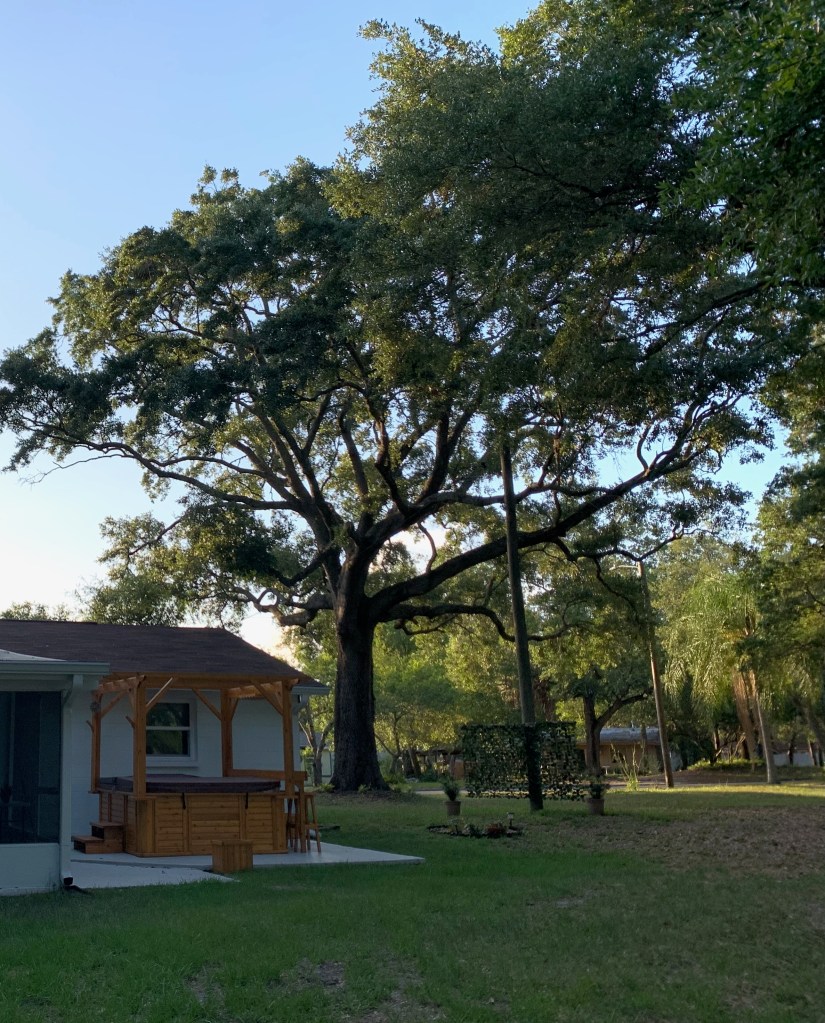
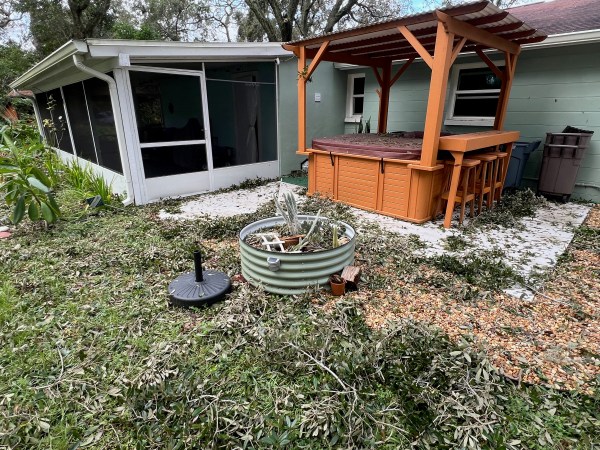
On a personal level, I came through the storm just fine. My 1962 home, built like a bunker from cinder blocks and updated with Dade County Code windows, withstood Milton’s wrath. The 13 oaks on my property are all still standing, albeit a lot thinner than they once were. On the bright side, there will be a lot fewer leaves to rake when Florida experiences its version of an autumnal leaf fall in February and March. I was particularly concerned about my legacy oak, which is probably as old as I am, 78. But she shed a few branches and stood tall. As you can see, she shed quite a few branches along with the others. The cleanup in my yard alone is a massive amount of yard waste. Landfills in Florida are filling fast after the twin visits of Helene and Milton.

It is said that this spate of severe storms is a result of global warming. I believe it, but hurricanes have been a fact of life for a long, long time. And history has some remarkable and relatively unknown stories of severe hurricanes. In 1814, the British were burning the buildings in the fledgling capital of Washington, DC, and it looked as though they would prevail in the War of 1812. But on August 25, 1814, a “freak” storm arose with torrential rains that doused the fires in Washington. There were fierce winds and tornadoes that lifted canons off the ground. With no safe housing, the British soldiers had to endure the storm while totally exposed to the elements. More British soldiers died as a result of that storm than the actual fighting. When calm returned, the British turned heel and retreated.

This 1814 freak storm was undoubtedly a hurricane, although it lacks a name. Significant storms have been given names for centuries but the practice of naming every tropical storm and hurricane is a modern practice that dates to 1979. The names of significant storms, like Helene and Milton, are retired, living in infamy, or perhaps the yet-to-be-built Hurricane Hall of Fame. I know I won’t forget them, and I’ll never again call a hurricane nerdy. I know many nerds, and I’m a bit of one myself. Milton was no nerd. Milton was a killer of lives and dreams. ❧

References

https://www.heraldtribune.com/story/news/local/sarasota/2024/09/29/hurricane-helene-reopens-midnight-pass-between-siesta-and-casey-keys/75412865007/

https://www.thevintagenews.com/2018/10/12/burning-of-washington/

https://en.wikipedia.org/wiki/History_of_tropical_cyclone_naming

Coloring in the 21st century

I have a somewhat tortured relationship with my artistic abilities. Somewhere in childhood, some circuits got muddled. My drawing abilities in elementary school were pedestrian at best. My father preserved several examples, found after his death, tucked safely away in his papers. They are sweet but unexceptional. As a child, I don’t recall any leanings towards drawing or painting.

But then there was coloring, and I loved coloring. There were coloring books, of course, and in school, we were given mimeographed drawings of scenes, animals, and objects to color. In the third grade, I was at work on one of these mimeographed sheets, a farm scene with cows, and the teacher chastised me for coloring one of the cows purple. In 1955-56, such an action was wrong. I recall embarrassment but also a bit of rebellion. I don’t know if I was sophisticated enough to form the thought that cows can be any color you want in art, but I do recall thinking, “Why can’t the cow be purple?” with a bit of petulance.

This event has stayed with me longer than it should have. As I got older and traveled through the school system, “art” became something that made me tense, and I fell into the dreaded and whiny, “I can’t!” For many years, I did not feel particularly artistic. In retrospect, I now see that artistry and creativity were equated in my head. They are not necessarily synonymous, but in the educational system of the 1950s, they were. 

History, whether vast or personal, must be placed in context.  In post-World War II, there were expectations. Boys, of course, played sports and weren’t expected to be artists. But girls were expected to have some “culture.” My sister, older than me by five years, really excelled at the “cultural” things. She could draw quite well and played the piano. I was pushed in similar directions and failed. I could barely draw a straight line, and just as I began to appreciate the piano (after a couple of years of frustrating and endless scales), my family moved to Florida and left the piano behind in Massachusetts.

Thankfully, there was a 1950s phenomenon that helped put the purple cow episode behind me: paint-by-numbers. The concept was patented in 1923, but it really caught on when a paint company owner, Max Klein, teamed up with an illustrator, Dan Robbins, to create the Craft Master brand. Introduced in 1951, the brand went on to sell 12 million units! 

A few of those units arrived in the O’Leary household and became a family event.  At first, I was shut out of the fun. As the youngest, my motor skills weren’t the best yet. Eventually, under supervision, I was allowed to paint some of the large areas of sky or sea. Paint, after all, is expensive and messy. My mother, sister, and the youngest of two brothers, Peter, became the primary “painters.”   But the clever Messrs. Klein and Robbins soon invented color-by-number kits perfect for children like me. That, of course, led to lusting after the cleverly packaged Crayola crayons. I can still see those beautifully displayed crayons.

In 1996, Peter was dying of pancreatic cancer, and I traveled to California to visit. On arrival, I found him at the family dinner table with a paint-by-numbers kit. It brought back many memories, and we talked about those Craft Master kits from long ago. I think the paint-by-number kits were a haven for Peter. He was a quiet and shy boy in a time that wasn’t sure what to do with quiet and shy boys. Now, in his final days, that comfort returned.

All of this came back to me recently as I impatiently dealt with recovery from knee replacement surgery. Unable to get about and bored with streaming TV, I thought about paint-by-numbers. Surely there’s an app for that, I thought. Of course, there is. Dozens in fact. It’s easy to become overwhelmed in these situations. I plunged in with two “free” apps, Lake Color and Zen Color. Nothing is free, of course, and the annoying “in-app purchases” quickly drove me to the paid editions, as designed.

If you didn’t know (I didn’t),  there are two types of coloring apps: one is the descendent of those Craft Master kits with numbers corresponding to colors. But they are much easier than the old Craft Master kits. You simply choose a color, find its corresponding number in the sketch, and tap. Voila! The color magically fills the space. No worry about staying in the lines or choosing the wrong color (no opportunity for a purple cow, either). For that style, I chose the Zen Color app. I think the “Zen” comes from the fact that you can lose yourself while filling in the colors. It can be quite addictive.

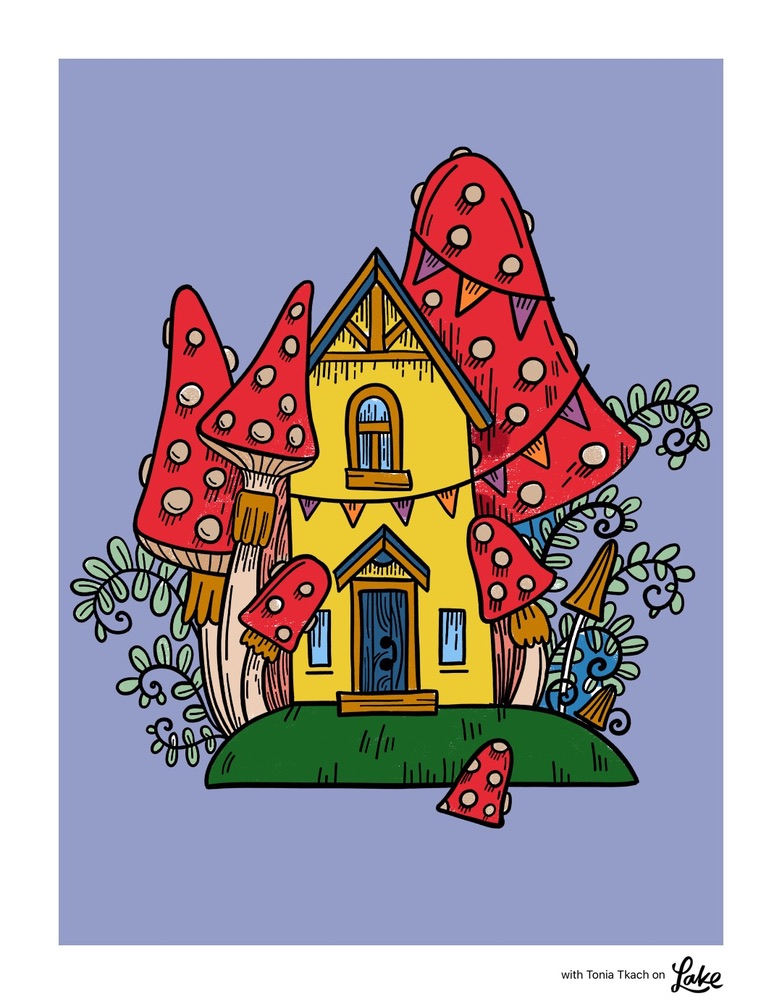
The Lake Color app is more freewheeling and artistic. It presents a sketch with an array of color palettes and tools. With no third-grade teacher hovering, you can have a lot of fun here. The sketches range from easy to exceedingly complex, and you can let your creativity soar with Lake. Still stinging from my third-grade teacher’s comment, I looked for a cow to paint purple. Alas, cows are not in favor. The same cannot be said for kittens and unicorns, of which there are dozens. So I looked for something whimsical and started in. That’s my first effort with Lake featured above. Lacking a cow to paint purple, I went for the sky.  I still can’t draw, but I do feel artistic. ❧

Plain and Simple: Tim Walz

There is so much about Tim Walz that is likable, but in this writer’s opinion, it all comes down to this: the man is plain and simple. 

Some may find that insulting. These words can undoubtedly be used disparagingly. But take a moment to research their true meanings, and I think you will agree with me. Governor Walz is not a complicated man; he might just be brilliant.

During the initial news coverage about Governor Walz, I thought of Harry Truman, the haberdasher from Missouri who ended up the 33rd President of the United States. Say what you will about Truman; he was indicative of the “plain” Americans who have occupied the highest offices of the land. You might not think of Lyndon Johnson as a “plain” American but, like Walz, he was a high school teacher before getting elected to the House of Representatives in 1937. From there, Johnson would catapult to the Senate and then the vice presidency, and then, through tragedy, to the presidency.  Several years later we had a peanut farmer, Jimmy Carter, as president. He was a plain American from Plains, Ga. 

These three presidents from the 20th century shared another feature with Walz: none was a lawyer. In fact, Tim Walz is the first non-lawyer since Jimmy Carter to grace the Democratic ticket!

I learned this fascinating fact in a recent Slate article  written by Dahlia Lithwick. She makes the case that having a non-lawyer on the team occupying the White House may help the country in many ways, perhaps none as important as convincing the country that changes to the Supreme Court are needed. She writes, “In a year in which the Democrats are putting the Supreme Court on the ballot, that makes [Walz] perfectly positioned to talk about what the court has done to ordinary Americans and why it matters.”  

Lithwick makes an excellent case for the need for reform of, as she calls it, the “imperial” Supreme Court. “The Supreme Court supermajority represents a democracy crisis that needs to be discussed at barbecues and high school lunch tables, not just pondered in the stacks at Ivy League law schools,” she writes. Walz, she concludes, is perfectly positioned for such a discussion. “Let’s have a conversation on court reform from someone who has lived, and taught and governed, under the hand of a court that seems not to care about the real impacts of its decisions.”

The current Supreme Court is an embarrassment, starting with the longest-serving justice — Clarence Thomas—to the Trump-trio of Brett Kavanaugh, Neil Gorsuch, and Amy Coney Barrett. Lithwick maintains the conservative majority “sees itself as floating above all law and regulation.”  No wonder they could see their way towards granting Donald Trump absolute immunity. For this reason, Lithwick writes, “finally having a nonlawyer on the ticket to speak to what the court has done to ordinary Americans in these few short years is both vital and long overdue.”

For those who think changing the number of justices on the Supreme Court is Constitutional heresy, it will interest you to know that throughout the country’s history, the court has fluctuated from as few as five (John Adams, president) to as many as 10 (Abraham Lincoln, president). The Constitution is silent about a specific number, and rightly so. Needs change, and populations do, too. In 1865, when the court had ten justices, the U.S. population was around 31 million. Today’s population is more than ten times that number — 345 million! Logically, such an increase brings more legal entanglements, yet the Court operates with basically the same number of justices as our ancestors in the mid-19th century.

Plainly, changes are needed, and there would be something especially American if Tim Walz led the charge. It would be simply outstanding. ❧

Odd Optics

The Trump campaign has many problems, but one of the biggest is optics. Like so many others, the word “optics” has taken on a different meaning in recent years. When I was younger, it referred to the scientific study of light and refraction. Somewhere along the way, it became a “scientific-sounding buzzword for ‘public relations.'” Jeffrey Bairstow at Laser Focus World dates this modern use of the word to Robert Strauss, a special advisor to President Jimmy Carter in 1978. Mr. Strauss, when asked to comment on a meeting of business leaders at the White House, reportedly said, “It would be a nice optical step.” Mr. Bairstow helpfully translates, “In other words, such a gathering would be a nice piece of PR with plenty of photo ops.”

Campaigns are all about photo ops. Kissing babies, eating corn dogs, and stopping in at the local coffee shop are all “optics” for the campaign. And political rallies offer “optics” by the barrel-full. They are events that scream AMERICA with flags and red-white-and-blue bunting, and placards with the candidate’s name in the largest font possible, and hand-made expressions of interest. Like this one from a recent rally in Montana (credit: realnewsmontana.com).

There are a lot of optics there, and viewers can discern, without even working hard, that this is a rally for the Democrats. The social messages are clearly Democrat.

Now contrast that to this image.

Do you see? The vice presidential candidate for the Republican party seems to be supporting Kamala Harris since the second part of the sign’s sentiment (“chaos”) is blocked by supporters. What Advance Person missed that snafu? Even if the supporters weren’t blocking the message, would the sentiment make sense? And what a collection of unhappy people behind JD Vance. This is not good optics.

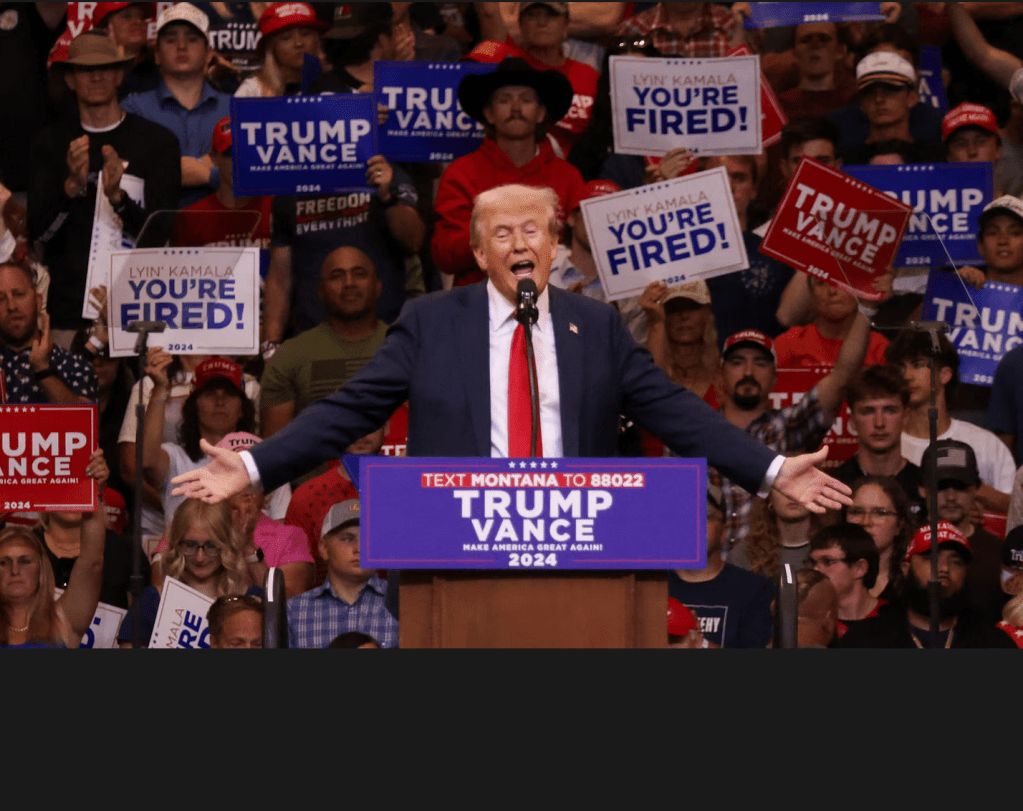
But by far, the worst optics come from the Big Guy himself. I wonder who conceived of the ubiquitous “You’re Fired” placard that appears at Trump rallies. It may have been himself since the slogan dates back to his finest hour, starring in NBC’s The Apprentice. A recent book about Trump, Apprentice in Wonderland by Ramin Setoodeh, posits that The Donald viewed the presidency as a continuation of his favorite role, just another episode in the reality show that ran for, well, several seasons. Like much in Trump’s life, it’s confusing.

Whoever it was should be fired. The placard has two lines, but the font size is so dominant on “You’re Fired” that in most cases, you can’t read the first line, which is “Lyin’ Kamala.” So what you see is “You’re Fired” behind a man running for president. Check it out.

Every time I see it, my mind reels. Dozens of Trump supporters with signs saying “You’re Fired” seem to convey the message that Trump should be fired. Of course, we know that is not the intended message. But the subliminal messaging is very bad, and the optics are terrible. But no one in the campaign seems to notice. ❧

Hello again…

I originally started this blog more than a decade ago to highlight my adventures, my thoughts, and pictures. It has been on hiatus as this spinning world of ours seemed to accelerate to light speed. Four years without a blog on Alice’s WanderLand doesn’t mean I haven’t wandered, but the twin afflictions of Trump and Covid made personal meandering seem selfish. And I’m not getting any younger, which has brought its own issues and distractions. It’s been a tough four years.

But now, there is a new spirit in the air. The extraordinary election events of July 2024, which led to the new Democratic ticket of Harris/Walz, have ignited electric energy in this country. New York Times writer Maya Gay totally nailed it when she noted that the new energy is not so much an issue of politics but a new pro-democracy movement.

The country is starved for this moment. It is full-on history, and, like so many, I want to do something! So, I have returned to an old love–Alice’s WanderLand blog–to share my thoughts and observations on Election 2024. Please check that your seatbelt is secure. It WILL get bumpy, but together, we can prevail. Feel the joy America.

The Vote

It is fair to say that we Americans are living history full on. The unprecedented presidency of Donald Trump, the COVID pandemic, and the Black Lives Matter movement … any one of these events would be termed historical. Taken together they are creating an historical maelstrom that will be parsed and dissected for decades.

History gets short shrift these days. The current populace generally sees everything in the moment and this tendency makes most people view history as snippets, if they think of history at all. This past week —with the dual confluence of our first black female Vice Presidential candidate and the Centennial celebration of ratification of the 19th Amendment —  has certainly focused many minds on that moment 100 years ago when women finally won the vote. I don’t recall learning much about the 19th Amendment in school but I do recall that my history books said that women were “given” the vote in 1920. As the excellent PBS series “The Vote” makes clear, women weren’t “given” the vote, they fought for 70 years to secure it.

Ida B. Wells

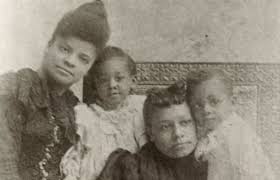
The series, part of the 32nd season of the PBS American Experience series, is well worth your time. It is produced in the Ken Burns style, lots of old pictures and archival film footage, with the writings of the principle players delivered by the likes of Laura Linney as Carrie Chapman Catt, Patricia Clarkson as Harriot Stanton Blatch, and Audra McDonald as the compelling Ida B. Wells (long before Rosa Parks refused to give up her seat, Ida B Wells did the same in 1884).

The series is particularly illuminating with respect to the interaction of black and white women during the struggle. Some of my younger friends may say, “So what? Today is about BLM, we already won the women’s vote.” Well, maybe so, but “The Vote” gives an interesting look at the role of black women clubs, something you are hearing a lot about in connection with Kamala Harris. And the historical intertwining of women and black rights helps to explain many of the problems we are still endeavoring to resolve.

Katherine Douglas Smith

There is, no doubt, a lot of racism on display in “The Vote” but even more is the ugly face of misogyny (which is “dislike of, contempt for, or ingrained prejudice against women”).  I defy any woman to watch this series — with its images of women speaking before crowds of men, many with jeering, misogynistic views clearly displayed on their faces — and not feel a chill up her spine. Every woman has seen those looks at one time or another and the modern day #MeToo movement demonstrates misogyny is still alive and well.  But to place yourself before a crowd of such men, who clearly despise the woman before them, was stunningly heroic. 

Ladies, we owe it to ourselves and our children to learn this history — or perhaps I should say herstory — of the brave women who labored for seven decades to give us a right that some of us will not even bother to exercise.  Watch this series and I can guarantee voting will never be the same for you.  On November 3rd be sure to exercise a right that women fought and died for. It seems the least you can do in this historical moment. ❖

Florida Mushrooms

Puffballs at Oak Forest

It is an unexpected bonus that my still-new home in Tampa comes with mushrooms. What’s the big deal, you might say?  Well, none of my other Florida homes had mushrooms, probably because they were condos and the grounds were “manicured” every week without fail.  In 2011, under one of the trees outside my last condo, I did find some puffball mushrooms and I rushed to preserve the images.

Continue reading “Florida Mushrooms”

Blog at WordPress.com.

Up ↑