Fecundity

It was some years back that I first came across the word “fecundity.”   My recollection is that the word was the title of a book that I bought, written by Annie Dillard, Gretchen Erlich, Barbara Kingsolver — someone of that genre — but, if it was, I no longer have it.  Nor can I locate anything close to it by employing web search.  Don’t get me wrong, there are plenty of books on “fecundity” and that seems only natural if you know what fecundity means.  One dictionary describes it this way:

ability to produce offspring: the ability to produce offspring, especially in large numbers

This particular definition fits with the trend that I found in searching for the book I thought was named “Fecundity”.  Most books with this word in its title seem oriented towards population control and the effects on unbridled fecundity upon civilization.
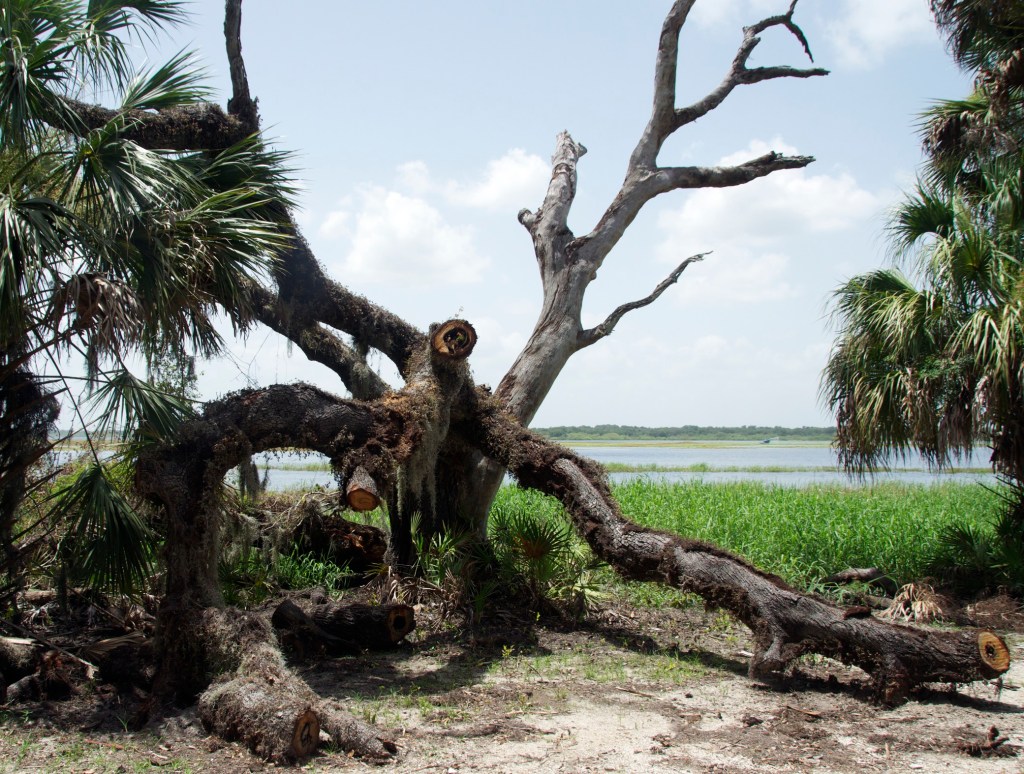
Shattered oak tree by road along Upper Myakka Lake.

But the book or essay that I am recalling was not of that orientation.  Rather it was an enthusiastic look at the power of life to re-generate even under the most dire circumstance.  I think of the word often in my trips to Myakka River State Park.  It has has crossed my mind during the past weeks as I drove past this old oak tree that had stood by the Upper Lake for many years. You could see it was weakening.  One section had already died and lost leaves, limbs, and bark.  Tropical Storm Debby brushed by Sarasota in late June 2012 and its minimal winds and excessive rain was the final straw for the oak.  It collapsed, part of it blocking Park Drive.  And so the rangers came with their chain saws and cut enough to clear the road.  The debris was pushed to one side and they moved on to the next problem.

It was a month later when I shot this next image.  Springing from the clean cut of the chain saw amputation was a fecund and colorful offspring .
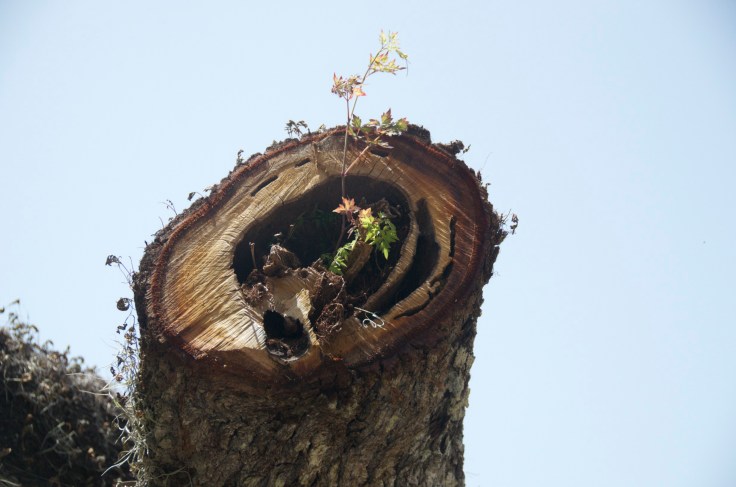
Life springing from dead oak tree.

I first thought it was a small oak, struggling to find the sun and start the process over again.  As I look at it today I think that it may just be a vine of some kind.  But it doesn’t really matter what it might be because that isn’t the point of this essay.  Nor is my goal to praise fecundity because reproducing offspring in large numbers is not especially a healthy concept at this point in our evolutionary course.

The point is to celebrate the grandness of life, a life that can spring hope and rebirth from the shattered ruins of a once proud oak tree.  As humans we are all too likely to just see the shattered tree and feel sadness for what had been.  Peace comes from the acceptance that all things must pass and the knowledge that the world will go on.  ❧

The Book is Here!

For months I have been engaged in a labor of love.  Myakka River State Park: A Small Tribute is a project that began as a 20-page booklet first published at Blurb.com.  The goal was simple: to share with others, through my pictures, the peace and beauty I have found over the years at Myakka Park.  I printed several copies to give as gifts and the response was wonderful.  I thought of selling the booklet via the Friends of Myakka gift shop, located in the ranger station at the Park.  The response I received was heartening and a bit surprising.  They suggested I take the book to the Park’s main gift shop.  It seems the two gift shops have strict boundaries and what is carried in one shop cannot be displayed in the other. “The main gift shop gets much more traffic,” the volunteer explained, “And you can probably really sell a lot of these.”

Floating off to the gift shop I found manager and she definitely wanted to display the book.  But there was a problem.  As anyone knows who has created an online book, they are not necessarily cheap.  It became clear very quickly that ordering more books through Blurb.com was not economical for the purpose of selling numerous copies to the public.

Back to the drawing board.

That was nine months ago.  Like any gestation period, the product has gone through multiple and sometimes dramatic changes. It was logical that the book should become larger.  It has expanded from 20 to 52 pages and the number of images has quadrupled  from 20 to more than 90.  Layout changed too, abandoning the small, square format to one that is more in keeping with publishing standards.  I scoured the Internet for printers, gathered quotes and got my new, expanded book ready.  In between I was working my regular 40-hour a week job and time ticked away.  By the time I got everything ready to go it was the first of May.

I confidently sent the revised pages to the printer and that’s when I hit a huge glitch.  The pages that I had created in the software program called Aperture were not working with the printer’s specifications and I discovered , to my horror, that Aperture is not very flexible.  I could not make the small, necessary changes that the printer needed.  I was forced to engage in a crash course of graphic design options, none of which looked easy or cheap.  But there was no option.  By mid-May I set my new course and got at it.  The printer was very patient and helpful.  I learned a lot, especially about the elegance of Adobe InDesign.  And the beauty was that the book got stronger with each iteration.  Typos were found and corrected, copy was re-written, photos were replaced or re-adjusted.

Remarkably it is now complete and in my hands. Now comes the hard part…making it sell.

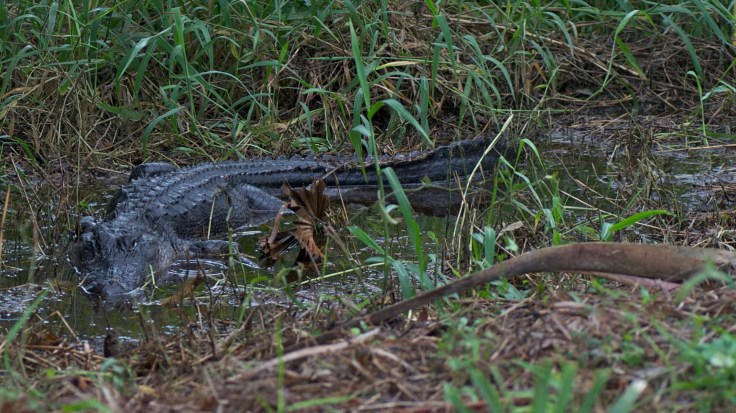
With the Myakka River running at flood stage alligators in Myakka River State Park are like kids let out for summer vacation.  Throughout the late winter and spring months, alligators were forced into smaller and smaller areas in the Park.  It was easy to spot them from the Park Drive bridge. One day last May I counted more than a dozen ‘gators visible from the bridge.  They were all pushed into a small remnant of the River.  But now!  The school doors have opened and the alligators are everywhere!  The Park is nothing but water and as you drive along the Park Drive you hear the ‘gators “talking” to each other — a strange snorting noise that those unfamiliar with alligators attribute to bullfrogs.  But make no mistake, the ‘gators have courted and the rising waters have been as welcome as Levittown was to the returning soldiers of World War II.  Nests are being made, eggs are being laid, and soon the Park will have many new ‘gators to amuse the tourists.

This handsome young gator was no more than three feet off the main drive in the Park.

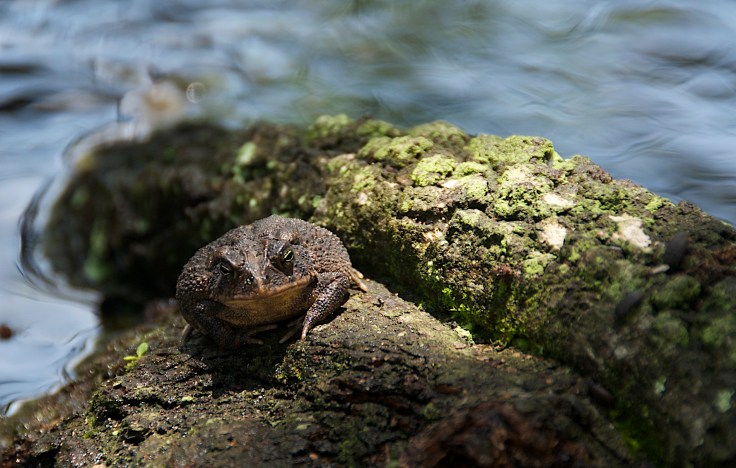
Myakka River is at flood stage and it is remarkably easy to launch the kayak.  Drive to park, drive along Park Drive, stop and launch.  The water is up to the road or over it.  You can kayak through the trees and find some new surprises, like this frog from today.

Myakka River State Park - The water is rising!

In just over a month Myakka River has gone from 0.07″ to more than 6′! And that doesn’t even include the rain from T.S. Debby that is just beginning to affect the River.

Three Weeks at Myakka

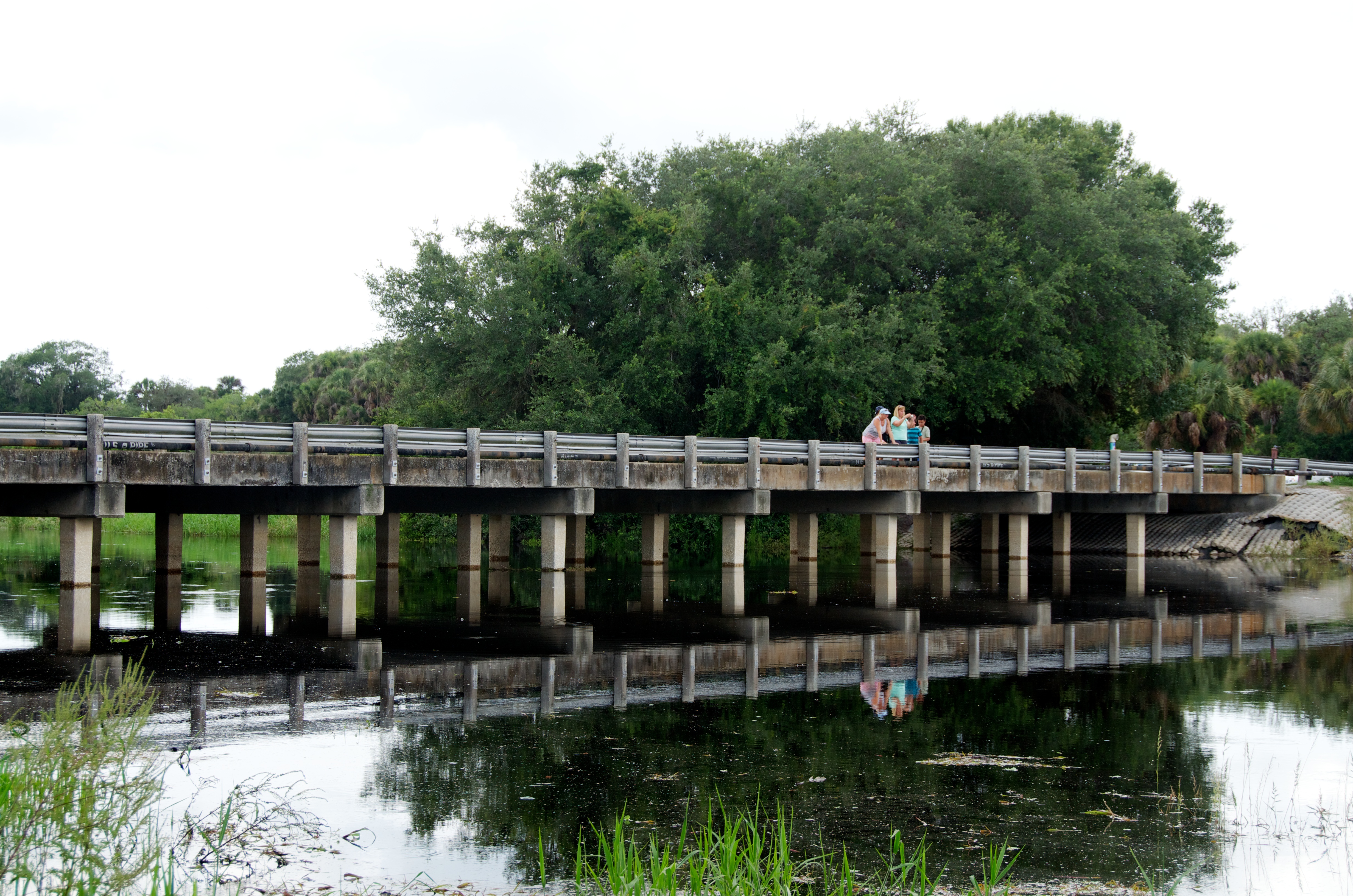
On May 27th I travelled out to the Park and found the drought situation was more severe than ever.  The official river gauge was 0.07 inches.  In short, there was no Myakka River.  Check out this photo from the Park Drive bridge.

Taken from the Park Drive bridge, May 27, 2012. The Myakka River gauge on this day was 0.07 inches. There was, essentially, no river.

I walked down the bank to the river bed and shot this photo looking back at the Park Drive Bridge.

Taken from the north river bank, looking back towards the Park Drive bridge. May 27, 2012

From that vantage point it was an easy trek up the dry river bed.  It was quite astonishing to stand on the river bed, knowing that normally the waters would be easily 4-5 feet high.  On May 27th there was barely a trickle.

Taken on the Myakka River bed, facing north on May 27, 2012. The river gauge this day recorded 0.07″.

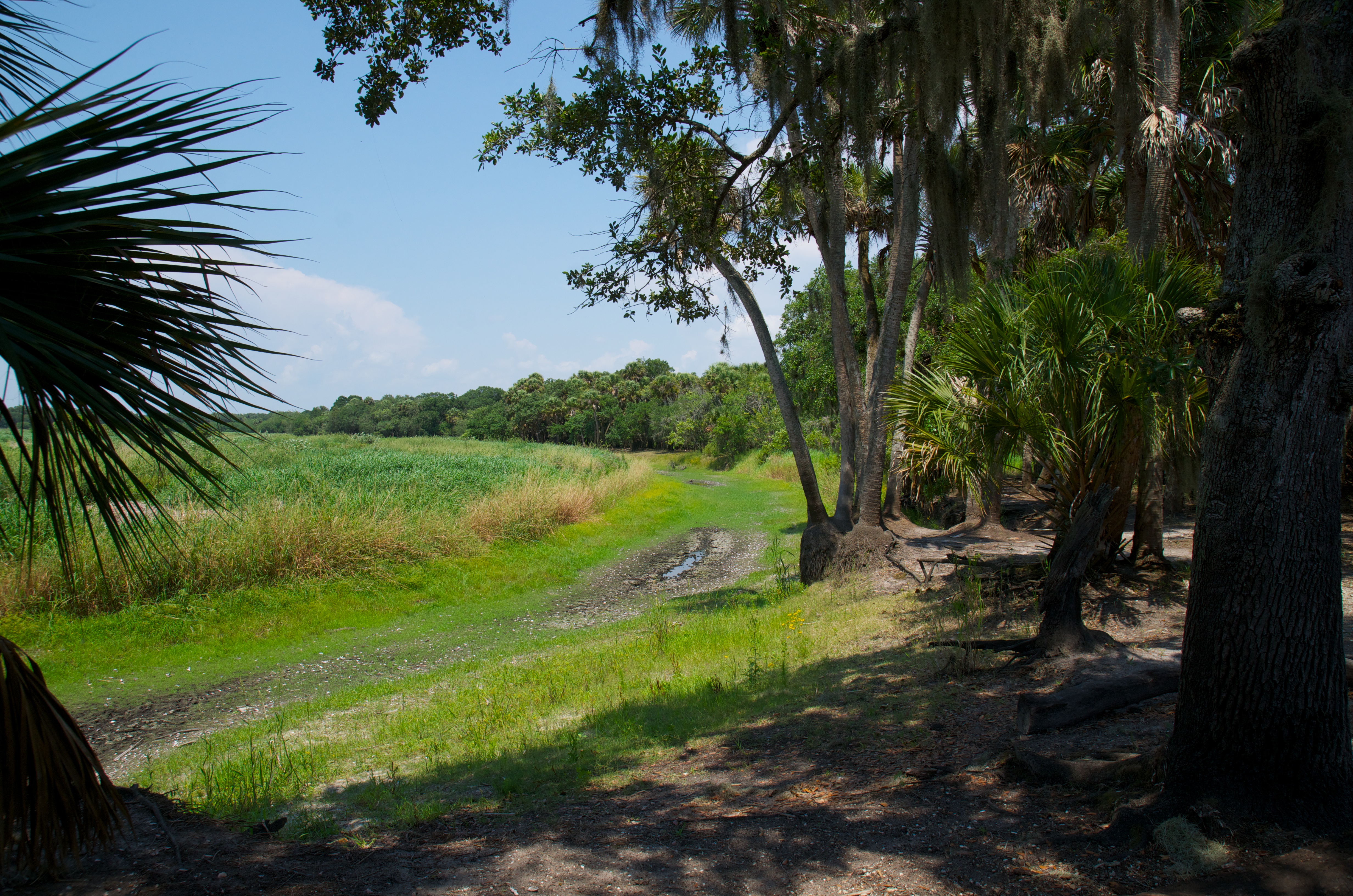
My next stop was just up the road, in a small picnic area that has no name.  I’ve taken many pictures here over the years but had never seen things this dry.

A completely dry river bed on Myakka River, May 27, 2012.

Can things get any worse?  Probably so but thankfully not.  A week later I would return to Myakka River State Park and the contrasts would be amazing.  During the week we had one day of good rain here in Sarasota County.  But to our north, in Manatee and Hillsborough Counties, there were extended rains.  Here is the same spot, one week later.

Fishing on the Myakka River, June 3, 2012.

A remarkable turn around in just seven days.  But the real astonishment was waiting on June 10, 2012.  After a very wet week in Sarasota County I checked the river gauge for Myakka River.  To my astonishment the River had risen from 0.07″ to 4.65′!!  And here is the result.

June 10, 2012. Myakka River level at 4.65′.

And at the Park Drive bridge there was no longer any chance to shoot the bridge from below.

Park Drive bridge, June 10, 2012.

The remarkable and ever-changing Myakka River State Park had once again amazed everyone with its ability to rejuvenate, seemingly over-night.

Myakka River State Park

I spend a lot of time at Myakka River State Park.  It’s located in Sarasota County and is one of the crown jewels in Florida’s magnificent state park system.  I love this place so much that I’ve taken more than 4,000 photographs there, walked or biked most of the available trails and recently, because of our severe drought, I was able to walk a good portion of the river bed.

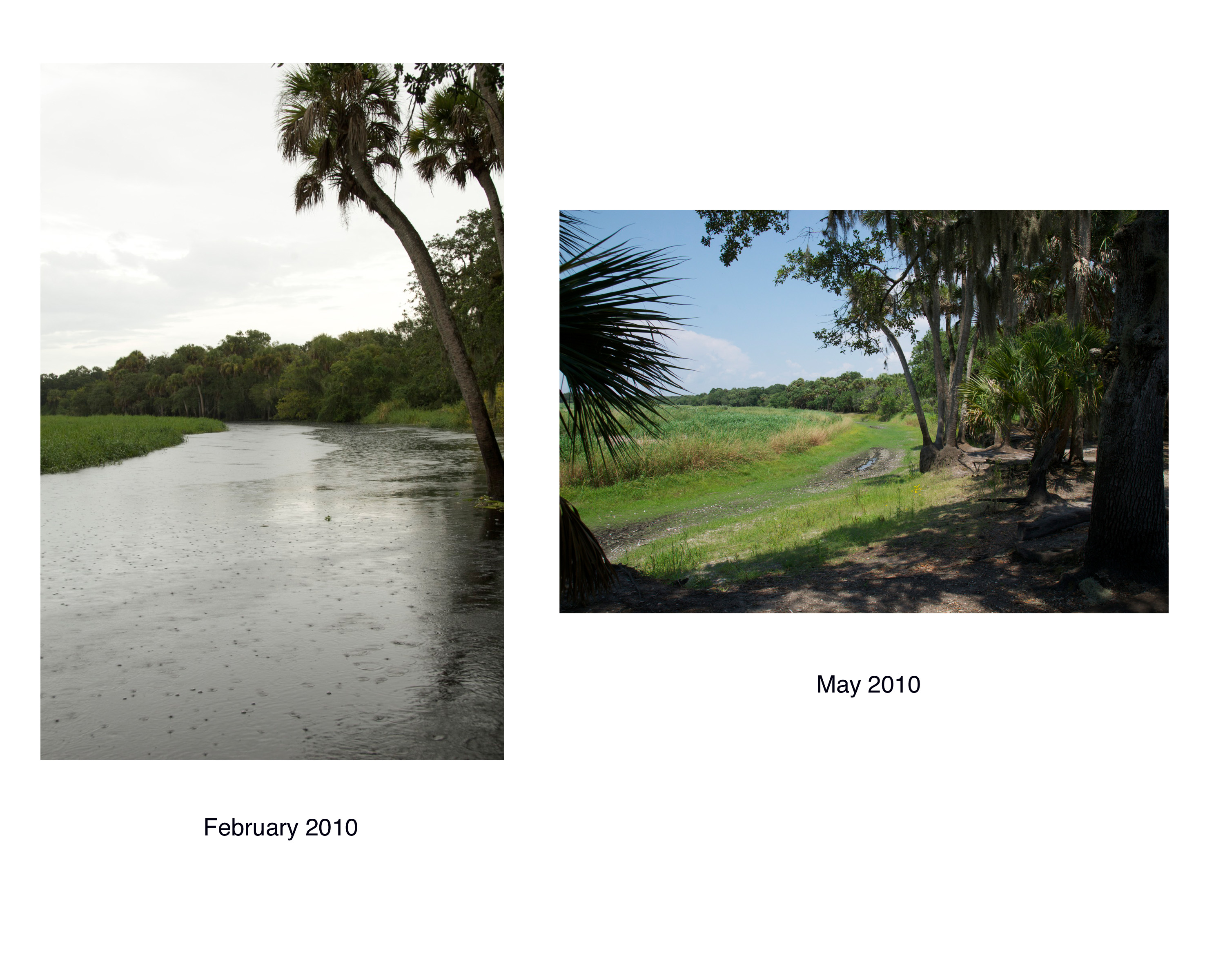
Look at these two photos.

Taken from the same spot twenty-seven months apart and you can get a good sense of just how bad our drought is here in South Central Florida.

The beauty of the drought has been how accessible it makes portions of the Park that otherwise are simply off-limits because of water or tall grass or both.  Walking below the Park Drive bridge, for example, doesn’t happen every day.

Park Drive Bridge – May 2012

You can literally walk on the river bed where there are hundreds of mussel shells, cracked open by hungry birds.

Mussel shells on dry river bed

And you find dead LongNose Gar, a fearsome looking fish that was no match for the ever-shrinking waters.

Long Nose Gar skeleton near Alligator Point.

There are many skeletons along the river bed. Only heaven knows what they might have been or how they met their demise. In times of high water you never think what is below the surface but it is clearly teeming with life and as that life shrinks away how will the other critters manage?  Yet the same is true on the other side of the scale.   How do birds manage in times of flood when there are no river banks to stand upon and await a meal?  How do they manage in times of drought when all the river banks have gone away and all the aquatic animals have died?  There are no answers.  Life carries on, somehow.  In a “civilized” society we sometimes lose track of the extremes in nature that are occurring just a few miles from our comfortable homes.  I doubt we could do anything to help relieve the stress that Park critters are enduring just now but perhaps we could become more appreciative of our own bounty and the importance of “Waste not, want not.” ❧

Blog at WordPress.com.

Up ↑