Image #211 – Good Geese!

Caesar

That’s Caesar in the white wings, feeling his oats I suspect. Caesar is Mary’s new male goose, recently acquired to replace the late and fondly remembered Doodle.  Caesar has been at Mary’s for about a month. I had the good fortune to observe his first dip in the pond.  The ladies were happy to join him.  They splash about and engage in reproductive as well as hygienic activities. Mary has wondered what the geese might look like who come from Caesar mating with the Toulouse geese.  Stay tuned . . . ❧

Image #210 – Bougainvillea blossom

SAMSUNG CSCFlorida is awash in azalea and bougainvillea blossoms. The oak trees are also in bloom, covering everything with yellow pollen. It is spring. To my friends in the north, it is coming your way.  Have faith. ❧

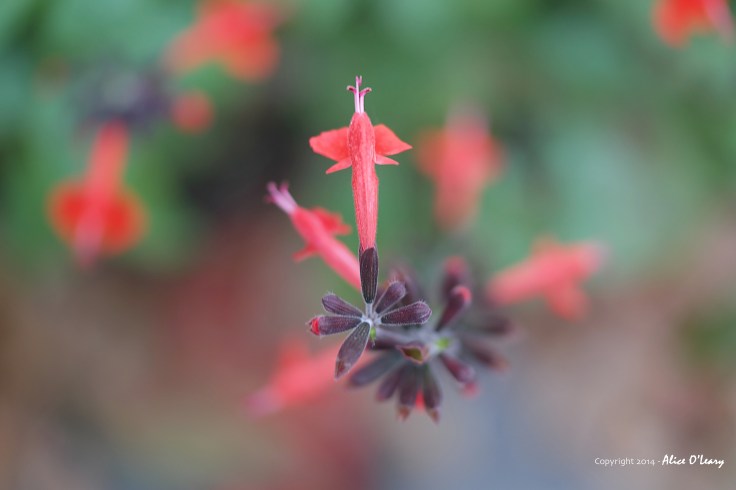
Image #209 – Red Salvia

SAMSUNG CSCBlossom and buds on a red salvia plant that is destined to become a part of Mary’s butterfly garden. ❧

Image #208 – I Wish I Knew

Image #208

I had a nice hike at Myakka River State Park on Sunday along with my friend Kim and, of course, Tango.  It was Kim who spotted the plant above.  At the time I was busy collecting my dog who had decided to go for a swim in the marshy area by the two-track path we were following. I didn’t really mind that he decided to go for a swim but his backpack contained my macro lens!  Thankfully no harm was done.  Tango did need a bath afterwards.

But I digress. This tiny gem is about 2″ in circumference and seems to favor marshy ground. We found numerous clusters near the marsh but none further on. Alas, all my reference books are in NC and I am in FL so I had to dig a bit on the web.  The “petals” as you can see, are spiked with a dewy substance on the tips.  The plant seemed carnivorous so I ran a search on Bing images but, as usual, there were pictures with no data.  I did locate one plant that was very similar and it had a name–Sundew.  So I proceeded with a search based on  “Sundew” plant and learned it was part of the Drosera family–there are more than 170 species.  So, Sundew is as good as it gets. They are small and easy to overlook–especially when you dog goes swimming with your macro lens. 🙂

Image #207 – Ladybugs, hired assassins

Image #207Many people have a love affair with Lady Bugs (Coccinellidae).  They are the stuff of children’s songs and story books.  Some will look upon them as emissaries from the spiritual world. But basically they are cute and colorful insects, welcome additions to a garden because they will eat other insects, especially aphids.

It is that Lady Bug talent that led my friend Mary to purchase more that 4,000 lady bugs.  To the uninformed, L.B.s can be purchased online and will arrive via the mail in a cardboard box that is dotted with air holes. The bugs themselves are in small wire-mesh type envelopes that you cut open and loose on your garden.  Mary is installing a butterfly garden and numerous aphids had found their way to it…I mean NUMEROUS. So rather than spraying them Mary decided to bring in a posse of hired assassins…the Lady Bugs.  That’s one of the 4,000 in the top picture. In the picture below you can see some of the aphids–the yellow dots– that are fodder for the L.B.s.  The L.B.s appear to be very efficient.  Mary is hoping they stick around. ❧

Image #207 (1)

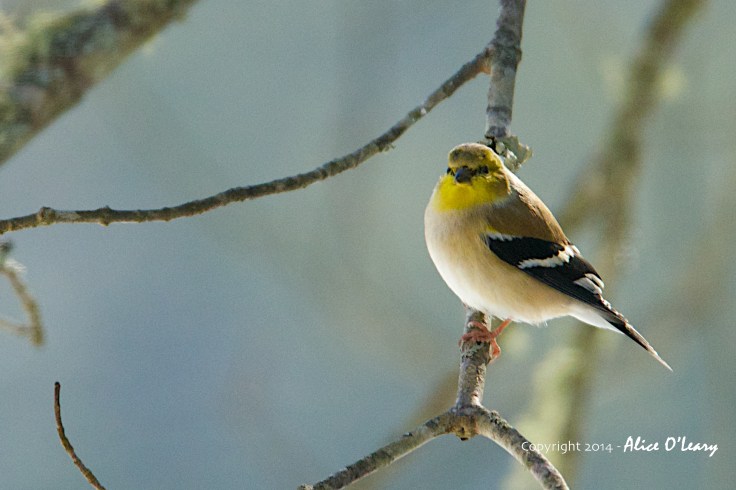
Image #205 – American Goldfinch – ready for spring

American Goldfinch
American Goldfinch

The seasons are beginning to change and signs of spring abound. This lovely female American Goldfinch is showing her new spring suit, looking for a mate.  I have no doubt there will be plenty of suitors. ❧

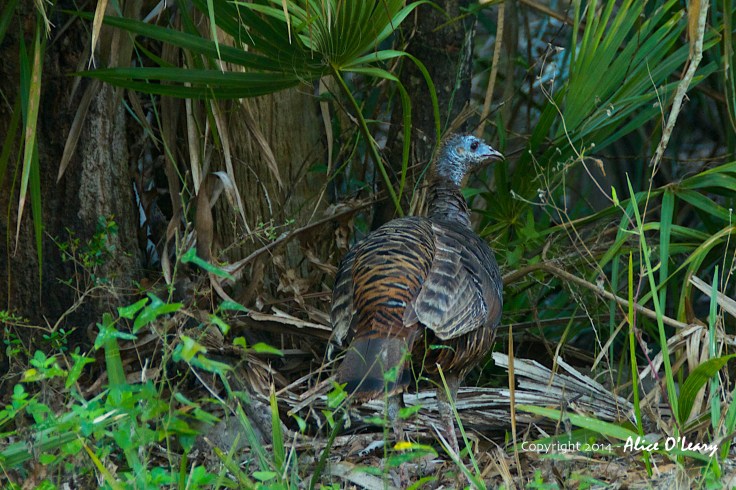
Image #204 – Wild Turkey

Wild Turkey (Meleagris gallopavo

Sorry if you were expecting a blog on Wild Turkey bourbon. This is the real deal, a young Wild Turkey from Myakka River State Park. At one point in time Wild Turkeys were virtually extinct in Myakka. Hunters had decimated the abundant flocks in the early 20th Century but the bird was re-introduced and protected. It now thrives. Perhaps these birds have some genetic memory of the slaughter their ancestors endured. They are always on the move, pecking quickly at the ground, never stopping…or so it seems. It has been hard to get a good picture but this picture shows quite a bit of the beautiful coloring on these birds. ❧

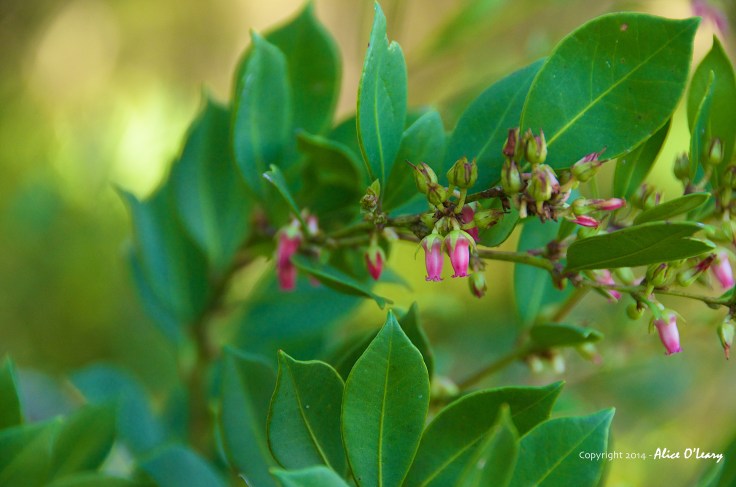
Image #203 – Wild Blueberries

Wild Blueberry blossoms

Tango and I got out to Myakka River State Park yesterday and had an excellent hike along Fox’s Low Road.  Spring is definitely springing here in Florida. The oak trees have that lovely spring green color, wild flowers can be found and, as you can see from the photo, the blueberries have started to produce their fruit.  From blossom to fruit is about 4-6 weeks, so these bushes will be ready to feed the birds when it is time to fly back north. What a marvel nature is. ❧

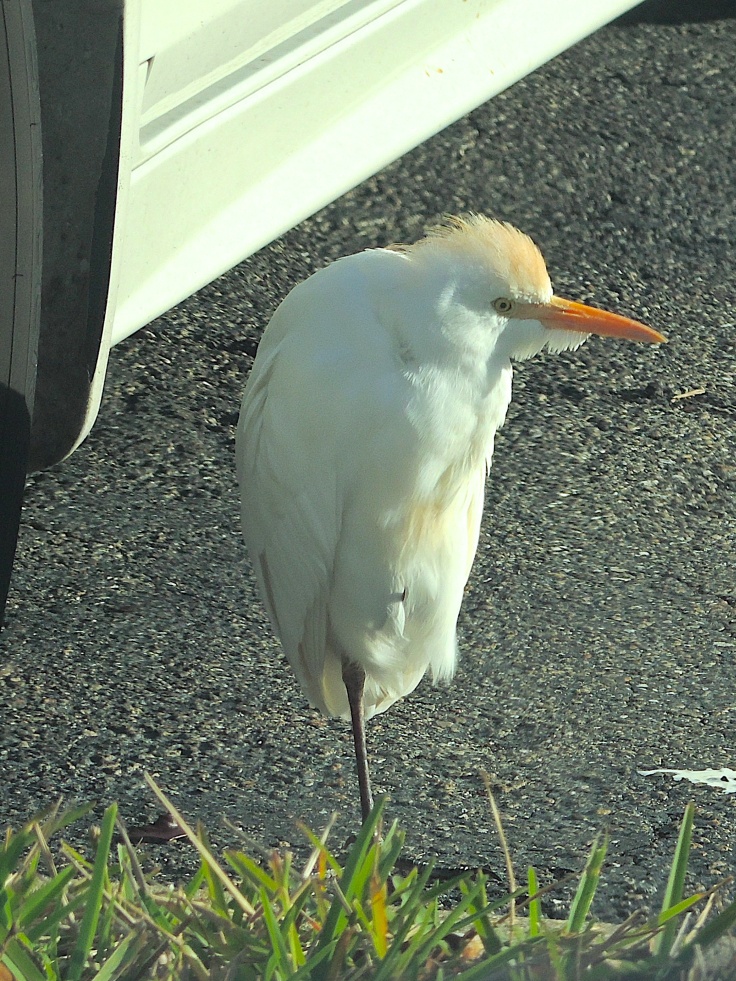
Image #201 – Cold Cattle egret

Cattle egret (Bubulcus ibis)

One of my favorite “Florida birds” is the Cattle Egret.  I put that “Florida birds” in quotations because this bird is in no way exclusive to Florida. It is found just about everywhere on the globe, rather like the Great Blue Heron. It is thought to have originated in Asia which is a long way from Florida. But I associate this bird with Florida because it was so ubiquitous when I was growing up. In those days Sarasota County had lots of pastures and lots of cattle. These little beauties were always in evidence. Sometimes they would be perched on the cow, picking bugs from the cow’s back or up near the cow’s ear. The cows seemed content with this arrangement and why not? Florida bugs can be very irritating.

This particular Cattle Egret was a long way from a pasture (although several decades ago it was grazing land).  It was in a parking lot, using a car as a wind shield. The wind was wicked yesterday and it was cold by Florida standards. This little guy was smart to take a breather — on the leeward side and in the sun.  When I looked up Cattle Egret on Wikipedia the entry stated, “The Cattle Egret (Bubulcus ibis) is a cosmopolitan species of heron …” Too right! ❧

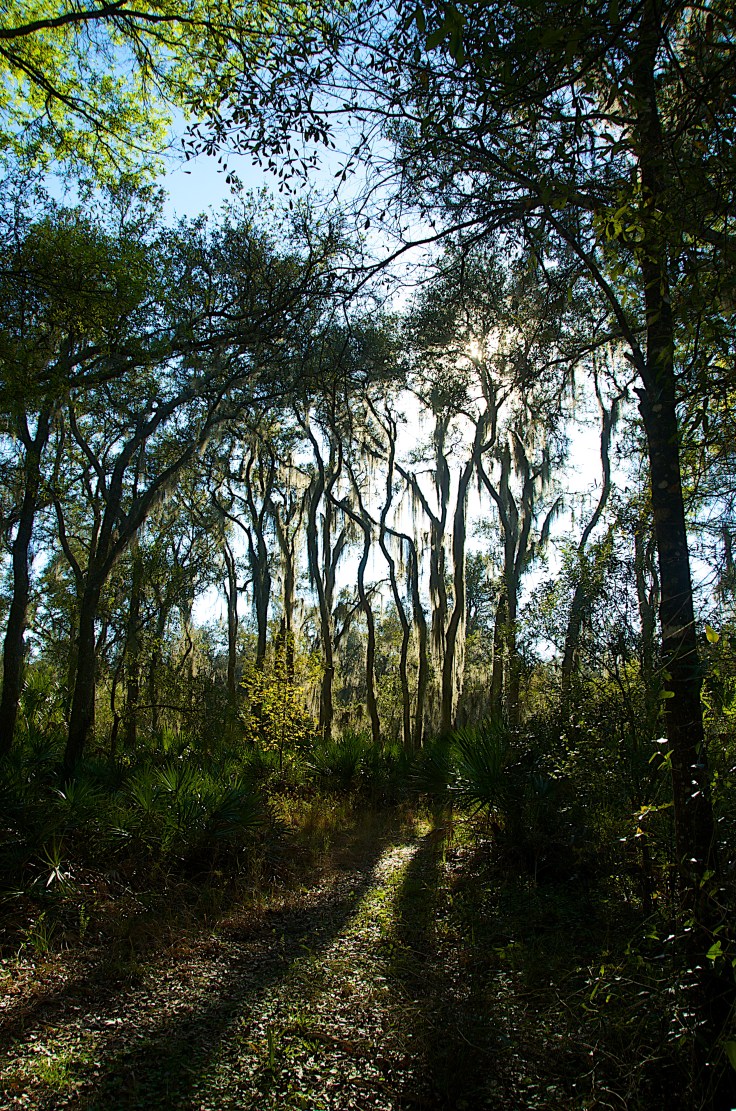
Image #200 – Seduction of the southern woods

Image #200
Nature walk at Trout Creek Wilderness Area in Tampa, FL.

Back in Florida for a spell. I managed to miss the mess that has happened along the Eastern seaboard this week. It hasn’t been a pretty picture, certainly not as pretty as this one. The Florida woods are beautiful now. It is spring here and, in the left hand corner, you can see some of that wonderful “new green” that occurs only in the spring. It is more than green…it is living color, full of promise.  Rejoice! Spring is on the march!  ❧

Blog at WordPress.com.

Up ↑