With the Myakka River running at flood stage alligators in Myakka River State Park are like kids let out for summer vacation.  Throughout the late winter and spring months, alligators were forced into smaller and smaller areas in the Park.  It was easy to spot them from the Park Drive bridge. One day last May I counted more than a dozen ‘gators visible from the bridge.  They were all pushed into a small remnant of the River.  But now!  The school doors have opened and the alligators are everywhere!  The Park is nothing but water and as you drive along the Park Drive you hear the ‘gators “talking” to each other — a strange snorting noise that those unfamiliar with alligators attribute to bullfrogs.  But make no mistake, the ‘gators have courted and the rising waters have been as welcome as Levittown was to the returning soldiers of World War II.  Nests are being made, eggs are being laid, and soon the Park will have many new ‘gators to amuse the tourists.

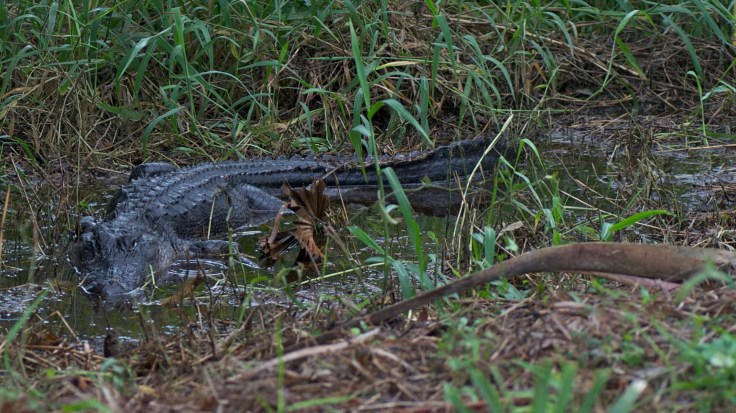
This handsome young gator was no more than three feet off the main drive in the Park.

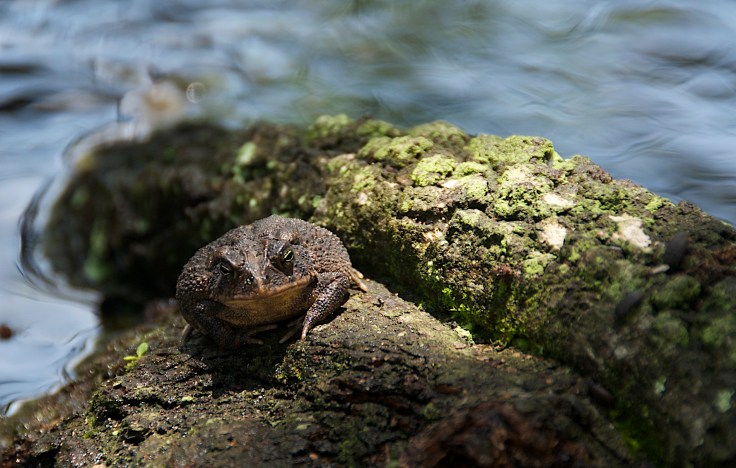
Myakka River is at flood stage and it is remarkably easy to launch the kayak.  Drive to park, drive along Park Drive, stop and launch.  The water is up to the road or over it.  You can kayak through the trees and find some new surprises, like this frog from today.

Myakka River State Park - The water is rising!

In just over a month Myakka River has gone from 0.07″ to more than 6′! And that doesn’t even include the rain from T.S. Debby that is just beginning to affect the River.

Three Weeks at Myakka

On May 27th I travelled out to the Park and found the drought situation was more severe than ever.  The official river gauge was 0.07 inches.  In short, there was no Myakka River.  Check out this photo from the Park Drive bridge.

Taken from the Park Drive bridge, May 27, 2012. The Myakka River gauge on this day was 0.07 inches. There was, essentially, no river.

I walked down the bank to the river bed and shot this photo looking back at the Park Drive Bridge.

Taken from the north river bank, looking back towards the Park Drive bridge. May 27, 2012

From that vantage point it was an easy trek up the dry river bed.  It was quite astonishing to stand on the river bed, knowing that normally the waters would be easily 4-5 feet high.  On May 27th there was barely a trickle.

Taken on the Myakka River bed, facing north on May 27, 2012. The river gauge this day recorded 0.07″.

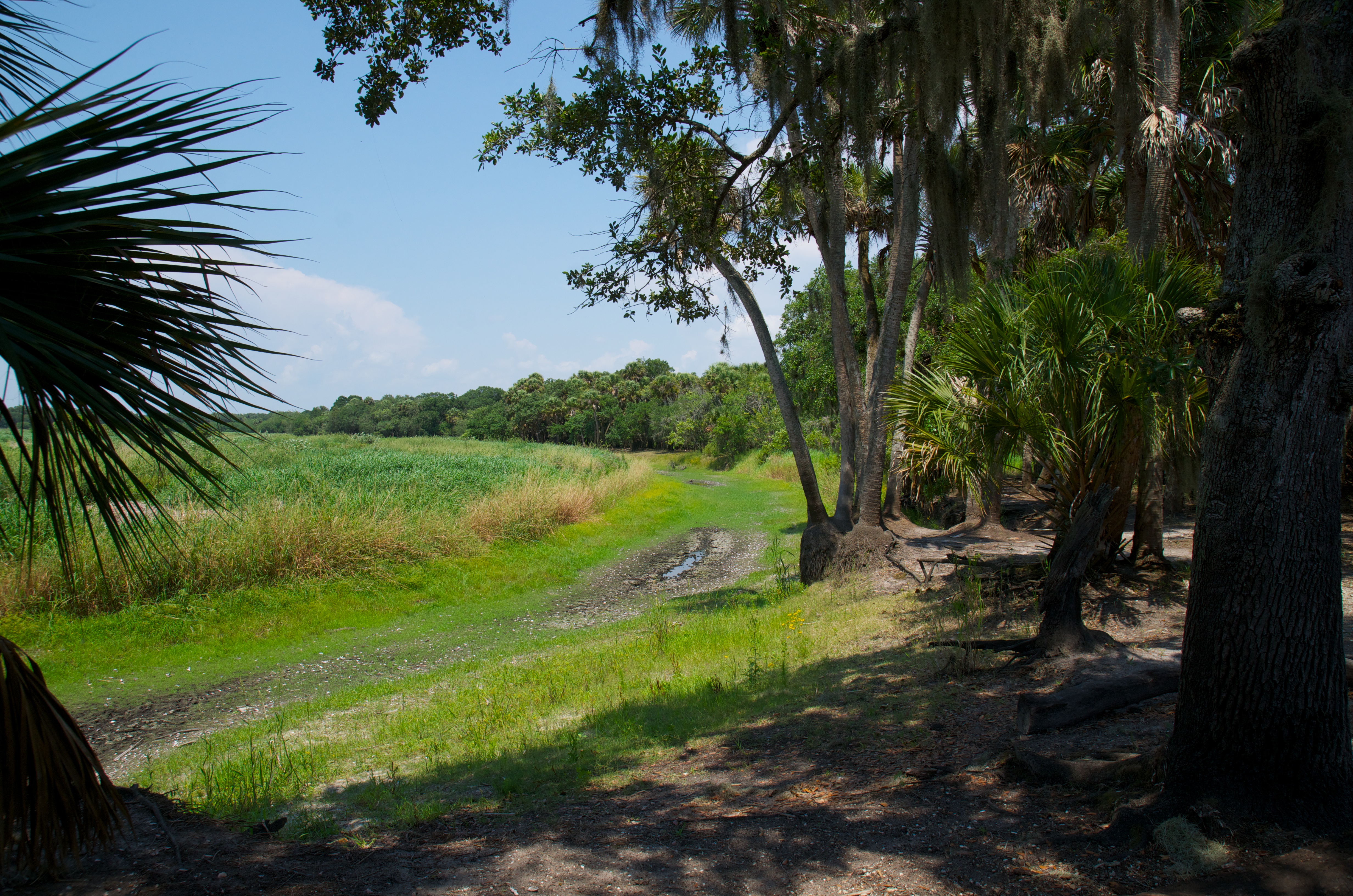
My next stop was just up the road, in a small picnic area that has no name.  I’ve taken many pictures here over the years but had never seen things this dry.

A completely dry river bed on Myakka River, May 27, 2012.

Can things get any worse?  Probably so but thankfully not.  A week later I would return to Myakka River State Park and the contrasts would be amazing.  During the week we had one day of good rain here in Sarasota County.  But to our north, in Manatee and Hillsborough Counties, there were extended rains.  Here is the same spot, one week later.

Fishing on the Myakka River, June 3, 2012.

A remarkable turn around in just seven days.  But the real astonishment was waiting on June 10, 2012.  After a very wet week in Sarasota County I checked the river gauge for Myakka River.  To my astonishment the River had risen from 0.07″ to 4.65′!!  And here is the result.

June 10, 2012. Myakka River level at 4.65′.

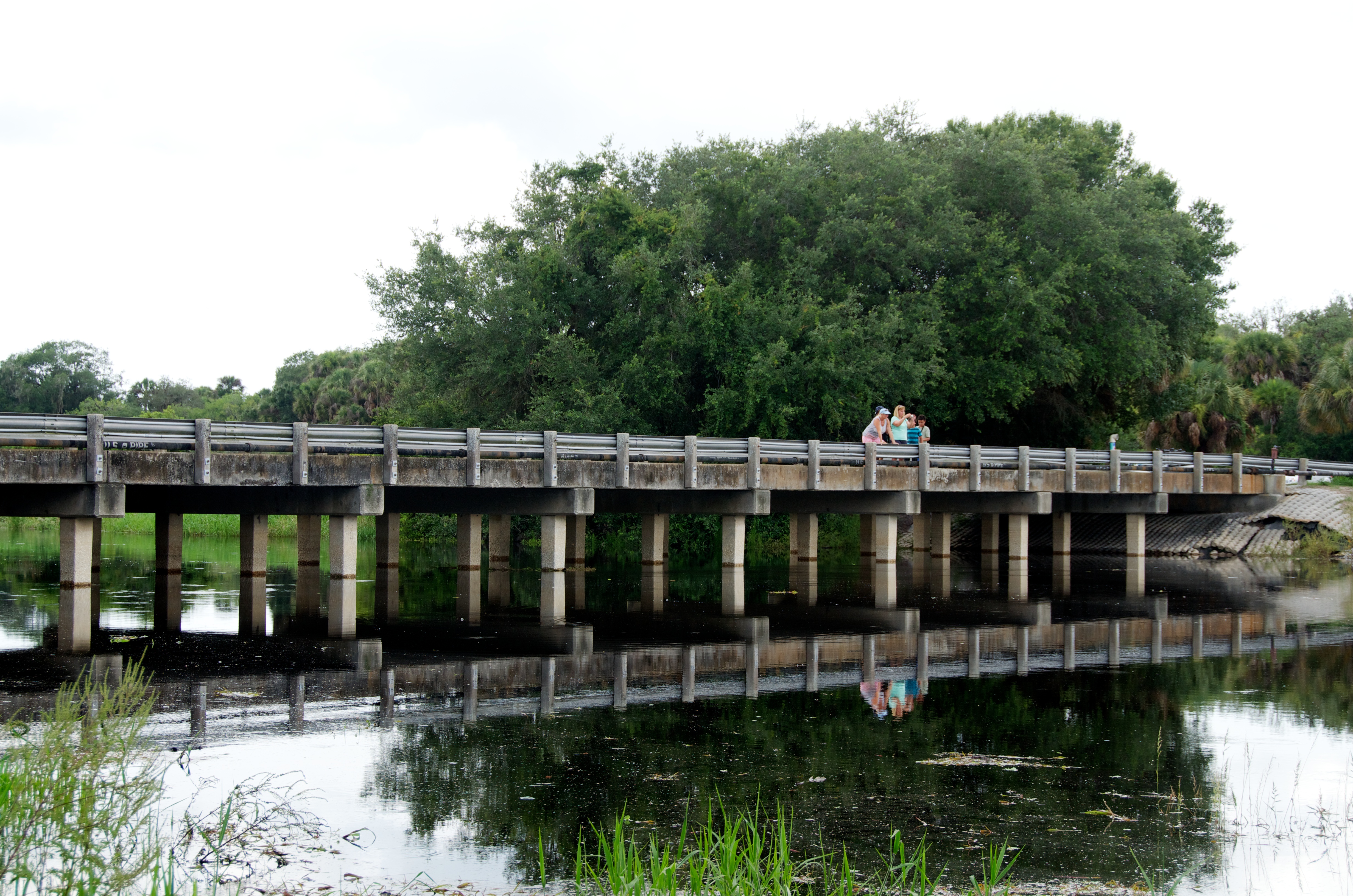
And at the Park Drive bridge there was no longer any chance to shoot the bridge from below.

Park Drive bridge, June 10, 2012.

The remarkable and ever-changing Myakka River State Park had once again amazed everyone with its ability to rejuvenate, seemingly over-night.

Death of a Husband … Death of an Issue

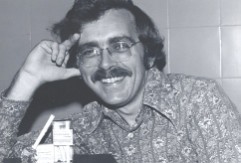
Robert C. Randall in November 1976 with his first supplies of legal marijuana from the federal government. He would receive federal marijuana for more than 25 years to treat his glaucoma.

Eleven years ago today my husband died.  Robert C. Randall was 53 years-old.

He was a man of some notoriety.  Often described as “the father of medical marijuana,” Robert accomplished a great deal in his 53 years.  In 1976 he became the first American since 1937 to receive marijuana under a doctor’s prescription and was the first to have “Uncle Sam” as his pharmacy.  Until Robert’s victory the only access to federal supplies of marijuana was through research programs and most of those programs were searching for the “harm” that marijuana would theoretically inflict upon the “drug abusers” of the 1970s.

But Robert proved — conclusively — that marijuana was THE drug that could help stave off the blindness which his glaucoma was certain to cause.  He used it in conjunction with other glaucoma medications and that is important to note.  He didn’t choose to use marijuana (although he didn’t mind using it).  It was only through the addition of marijuana to his regular medication regimen that his ocular pressures were lowered enough to prevent damage.  Take away any of the three to four medications that he used, including marijuana, and his ocular pressures went out of control.

All of this is well documented in books, films and on the internet.  Before starting this essay I did a Bing search this morning and was pleased to find even more entries than I had on previous occasions including a new, biographical entry on Wikipedia.  Three years before his death we authored a book, Marijuana Rx: The Patients’ Fight for Medicinal Pot which is a complete record of our twenty-plus years in the medical marijuana movement.  His legacy seems assured and rightly so.

And the medical marijuana movement goes on without him.  There were many soldiers willing to seize the banner as it fell and lead the charge.  The problem, it seems to me, is most are unsure of the direction the charge is supposed to go.  As Robert wrote,  “Once a morality play of intimate dimensions, medical marijuana has become a didactic drama driven by drug war motifs.”  He wrote those words in 1998 and they have become the reality of today’s world.  The “drama” of medical marijuana has gone on for so long, in so many different directions, that the result is a confused public that hears repeatedly about another “medical marijuana first” but has no idea what the fight is about.  “Medical marijuana?” they say, “That’s legal, right?”

Marijuana dispensaries are popping up in most states.  Their legality is clearly questionable since marijuana remains illegal under federal law.  Enforcement of this federal law is erratic and obviously prejudicial, dependent it seems of the direction of the political winds.  Many patients are actually receiving regular supplies of decent marijuana but the hard arm of the law could swoop down at any time and disrupt their health and wellbeing.  And there is the matter of “necessity.”  Almost two decades ago an activist proclaimed “all marijuana use is medical” and the early dispensaries in California were notoriously lax in their definitions of  “qualified” patients.  This has further diluted the argument making it harder for those with legitimate needs to get the support, both medical and pharmaceutical, that they need.

Don’t get me wrong.  There are many good people out there still working for rationality and compassion for those who medically need marijuana.  It is very touching to me that several dispensary operators have sought my permission to name their facilities after Robert, most recently in Lansing, Michigan.  These dispensaries are being operated in a remarkably responsible fashion and offer an oasis in a desert of arid federal policy that has not moved one iota in twenty years (since Bush 41 shut down the Compassionate IND program) let alone the past 35 years since Robert received his federal supplies.

There is still a medical marijuana movement but the medical marijuana issue, it seems to me, died with Robert.  He was able to focus the blame where it rightly belongs — at the federal government which has maliciously thwarted every reasonable attempt to rationally resolve a true public health problem.  Until such time as the immoral acts of the federal government are once again in the public spotlight it will be a difficult time for those seriously ill individuals who truly need marijuana medically.

Myakka River State Park

I spend a lot of time at Myakka River State Park.  It’s located in Sarasota County and is one of the crown jewels in Florida’s magnificent state park system.  I love this place so much that I’ve taken more than 4,000 photographs there, walked or biked most of the available trails and recently, because of our severe drought, I was able to walk a good portion of the river bed.

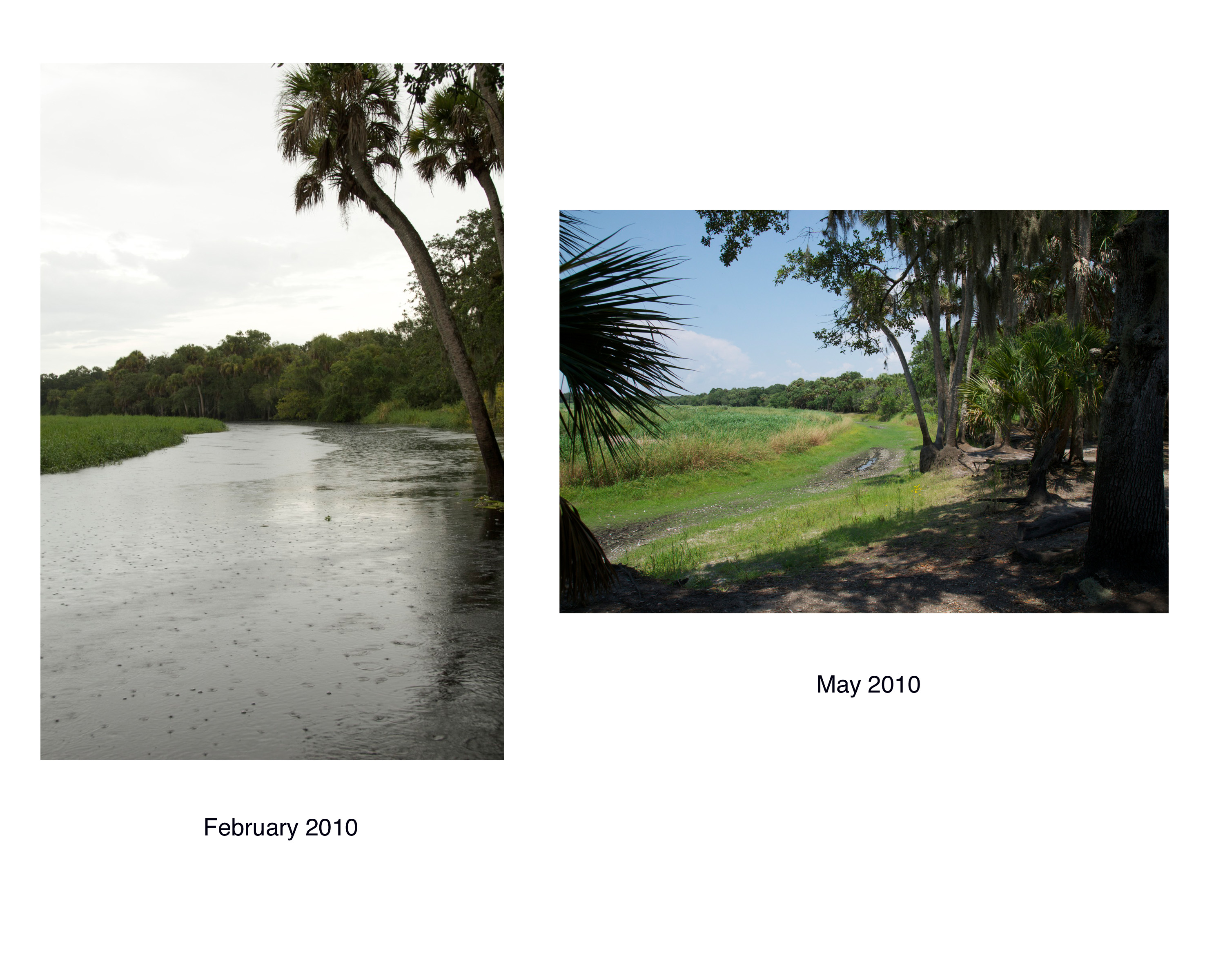
Look at these two photos.

Taken from the same spot twenty-seven months apart and you can get a good sense of just how bad our drought is here in South Central Florida.

The beauty of the drought has been how accessible it makes portions of the Park that otherwise are simply off-limits because of water or tall grass or both.  Walking below the Park Drive bridge, for example, doesn’t happen every day.

Park Drive Bridge – May 2012

You can literally walk on the river bed where there are hundreds of mussel shells, cracked open by hungry birds.

Mussel shells on dry river bed

And you find dead LongNose Gar, a fearsome looking fish that was no match for the ever-shrinking waters.

Long Nose Gar skeleton near Alligator Point.

There are many skeletons along the river bed. Only heaven knows what they might have been or how they met their demise. In times of high water you never think what is below the surface but it is clearly teeming with life and as that life shrinks away how will the other critters manage?  Yet the same is true on the other side of the scale.   How do birds manage in times of flood when there are no river banks to stand upon and await a meal?  How do they manage in times of drought when all the river banks have gone away and all the aquatic animals have died?  There are no answers.  Life carries on, somehow.  In a “civilized” society we sometimes lose track of the extremes in nature that are occurring just a few miles from our comfortable homes.  I doubt we could do anything to help relieve the stress that Park critters are enduring just now but perhaps we could become more appreciative of our own bounty and the importance of “Waste not, want not.” ❧

Time in a Bottle

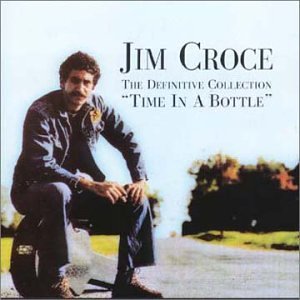
Album cover from Jim Croce’s “Time in a Bottle”

Jim Croce has been gone a long time.  Killed in a plane crash in 1973, Croce was the James Dean of the rock and roll world, stolen from us just as his massive talent was about to go super nova.  Unlike Dean, Croce was a just a regular guy with a wife and 2-year-old son which makes his classic “Time in a Bottle” all the more poignant.  Croce wrote that song for his son who is now a man in his 40s and probably has few, if any, real memories of his father.  But he does have “Time in a Bottle” and, no doubt, he has grown more appreciative of that song with every passing year.

Passing years make us appreciate time and who hasn’t wished to put “Time in a Bottle”?  I’ve been reading about time recently and came across a book entitled Momo written by Michael Ende and, curiously, published in 1973 — the same year as Croce’s death.  Momo was conceived as a children’s book but it has become a bit of a cult item and is more properly called a fantasy novel.  Wikipedia describes it thus:

Momo, also known as The Grey Gentlemen or The Men in Grey, is a fantasy novel by Michael Ende, published in 1973. It is about the concept of time and how it is used by humans in modern societies. The full title in German translates to Momo, or the strange story of the time-thieves and the child who brought the stolen time back to the people.

I was intrigued and immediately went in search of the book, which took a bit of — ahem — time.  The book is out-of-print which surprised me since Ende is also known for The Never-Ending Story which has exhibited staying power over the years.  I finally tracked down a copy  of Momo via one of Amazon’s suppliers.  It is in the mail to me and eagerly awaited.

Take the time to read a synopsis of Momo and you’ll get an eerie view of looking at today’s society in the mirror.  Grey suited men enticing the populous with gadgets and trinkets, encouraging them to trade their time for these baubles and to “save time” for the future when they can enjoy the fruits of their labors.

Sound familiar?

Momo has already taught me something and I haven’t even opened the book.  Perhaps it because my retirement is looming on the horizon that I was so struck with “saving time”.  Perhaps it is the work I do — grief counseling — at which I hear tales from those who feel that their “time was stolen”  because their future is now void of the one they loved.

The truth is we have no time except the moment we now live.  We say that often enough but do we really hear it?   Yesterday is most certainly gone and tomorrow is a dream.  We only have the moment at hand with which to work. Almost forty years ago a proud father sat down in his moment and penned a song that has endured to this day leaving  a crystal clear message of love to his son.  The things we can do with our time! Don’t squander the present trying to save for the future or you may miss your moment completely. ❧

Across the Universe

Every three or four years the PBS science program “Nova” puts on a show about the universe and I’ll tune in hoping to learn a bit more about space — the final frontier.  The current offering is “The Fabric of the Cosmos” hosted by a very affable physicist named Brian Greene.  Now, I’m not pretending to understand this stuff but it does interest me.  Black holes, super novas, expanding galaxies … it’s all interesting stuff.  But this current show, at least the first episode, is exploring a new concept.  Specifically, it puts forth the notion that space — that blackness we look at in the nighttime sky — is not as empty as we may have once assumed it to be.  Space is actually a kind of membrane or cloth, pulled taut, upon which the planets, suns, stars and other space objects rest.  And when they “rest” on that membrane or fabric they make a dent.  Sort of like this.

And those “dents” explain why our moon orbits about us.  It isn’t just our gravitational pull but it’s the dent in the fabric of the cosmos.  I think of it like a roulette wheel and the moon is trapped in that ridge above the numbers.  Okay, I know it isn’t very scientific but it is the way I “get my head around” this concept that we are sitting on a “membrane” or giant cloth pulled tight!

Don’t get me wrong.  I’m not ‘dissing the notion of a Cosmos Fabric.  Just the opposite.  I find the concept intriguing, fascinating, and oddly familiar.  Something in the concept strikes a chord within me.  Perhaps it is the vestige of stardust being re-awakened.  Perhaps it is a deep-seated but non-verbal “shock of recognition.”

All of which brings us to Bella, a stray dog who lived on the Hohewald Elephant Preserve in Tennessee. Bella was befriended, or vice versa, by Tara, a six ton elephant.  We’ll never know why.  You see, already it is like the Fabric of the Cosmos.
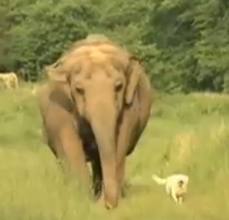
Bella and Tara spent eight years together.  At one point Bella suffered an injury and the nice humans who run the preserve took her into their compound to nurse her back to health.  Tara was distraught and stood vigil by the gate for several days, until the humans brought Bella down and showed her to Tara.  The delicate trunk snaked through the gap in the gate, sniffing and touching the injured canine.  All was well.

Bella was eventuallly returned to the preserve and her friend Tara.  If you visit the Hohenwald website (http://www.elephants.com/) you can see pictures of these friends in all seasons.  The joy they took in the company of each other is apparent.  But recently Bella died. She was killed by coyotes.  At least that is the speculation.  The humans at the preserve really don’t know.  They found Bella’s lifeless, torn body near the barn.  She hadn’t died there since there was no evidence of a fight. And when they found Tara there was blood on her trunk.  Tara had carried Bella to the humans.  She wanted them to know what happened.  Obviously with 2,200 acres Bella could have simply disappeared and never been found.  But Tara would have none of that. She brought her friend to the humans because she knew they cared too.

Bella was buried on the preserve and Tara has been seen visiting the grave. Tara’s elephant sisters have been staying closer to her, touching her with their trunks, offering her morsels of hay and food.  They know what has happened.  They understand.

So, what does all this have to do with the Fabric of the Cosmos?  Perhaps nothing.  But perhaps there is a membrane that joins all of us together…not just the planets and the vast “emptiness” of space.  And somehow Bella and Tara fell into each other’s orbit, content to enjoy each other’s company in ways that we, and possibly they, can never understand.  But joy is contagious and their friendship blessed all of us.

Blog at WordPress.com.

Up ↑